
Bill Gates wants companies to pay payroll taxes when robots or artificial intelligence do the same work a laid-off human used to do.
Story Snapshot
- Gates says match payroll taxes on automated labor to protect revenue and workers.
- He frames the tax to fund retraining and safety nets, not to punish tech.
- Multiple outlets confirm he renewed this plan in late 2026.
- Economists and industry critics warn such a tax could slow growth and innovation.
What Gates Actually Proposes
Bill Gates laid out a simple rule of thumb: if a robot or artificial intelligence performs a “unit of labor” once done by a person, the company should pay the same Federal Insurance Contributions Act (FICA) payroll tax it would have paid for the human worker. He argues this aligns the tax code with reality. Today, a firm pays payroll taxes for people but often gets to deduct machines fast. That tilt nudges firms to replace people faster than society can adjust.
Gates ties the idea to a clear goal. He wants stable revenue for Social Security and Medicare and a pot of money for retraining and support when jobs change or vanish. He also places the tax inside a wider plan that includes reserving some jobs for humans and setting guardrails for powerful artificial intelligence systems. The message is not “halt the future.” It is “do not starve the safety net while you embrace it”.
Why This Caught Fire Now
Newsrooms amplified the plan because it gives a crisp answer to a real pocketbook fear. Automation is moving from factories to offices, call centers, and even clinics. Payroll taxes fund core programs, yet automation can shrink the wage base. Gates’s proposal grabs that tension in one line. Several major outlets reported his renewed push in August and September 2026, making it a mainstream policy storyline, not a stray remark. Fortune highlighted his claim that a tax could slow the rush and help pay for retraining.
The appeal also comes from its fairness pitch. Many Americans think the code favors capital over labor. Gates echoes that view: a company can write off machines while paying full freight on people, so the tax code quietly rewards replacing them. Equalizing the payroll burden sounds like common sense. It treats work as work, no matter who—or what—does it. That framing invites support from those who prize responsibility and a level field.
Where The Plan Meets Resistance
Critics say the slogan hides messy details. What counts as a “robot” in a service economy? A physical arm on a line is clear. A scheduling bot or a large language model that drafts reports is not. A 2022 law review article warned that the robot tax idea breaks down until society reaches a broad definition that can survive in court and in audits. Gates has not yet offered legislative text, thresholds, or enforcement rules in public sources.
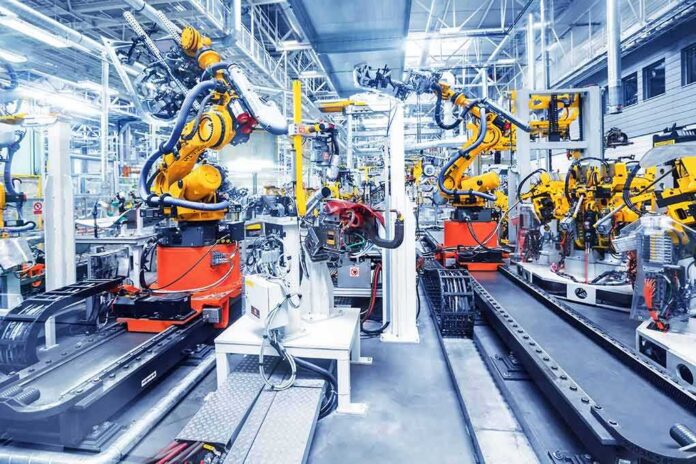
Bill Gates says if a company fires a worker and puts a robot in that job, the robot should pay the same FICA tax the human paid.
Active workers fund retirees, and replacing the worker should not be a way to skip the pension bill.
"Society gets to decide. Just because the… pic.twitter.com/oPri9GrZW6
— Rohan Paul (@rohanpaul_ai) October 1, 2026
Economists also push back on growth grounds. The Information Technology and Innovation Foundation argued that taxing robots would slow productivity, wages, and gross domestic product, and that the case rests on a flawed fear of job loss. Industry outlets show manufacturers rejecting the idea as anti-innovation and easy to dodge by offshoring or re-labeling software projects. On the other hand, supporters point to the simple truth that payroll taxes vanish when machines replace people, which leaves the trust funds short unless something fills the gap.
A Conservative Read On The Tradeoffs
Tax policy should reward work, investment, and responsibility. Gates identifies a real asymmetry: businesses pay payroll taxes on people but can expense machines quickly. That can tilt choices. The fix, however, should be precise and pro-growth. A broad “robot tax” risks punishing tools that raise output and lower prices. A better path may be neutral payroll reforms or targeted base-broadening that keeps Social Security and Medicare funded without choking innovation or driving jobs overseas.
Lawmakers could test small, clear pilots. For example, require payroll-equivalent payments only when a firm documents a direct one-to-one layoff tied to an automation system, with a sunset and public reporting. Pair that with faster expensing for technologies that augment workers rather than replace them. Tie any proceeds to rapid, skills-focused training. Demand outside scoring so voters see costs and benefits upfront. If a proposal cannot pass that smell test, it should not pass at all.
What To Watch Next
Watch for a concrete draft that defines taxable automated labor and carves out tools that boost human output. Look for budget scoring that estimates revenue and tests whether firms would avoid the levy by shifting to software subscriptions or sending work abroad. Track testimony from labor economists, tax attorneys, and manufacturers. Media coverage confirms that Gates has put the idea back on the table; now the question is whether Congress can turn a clean slogan into a clean statute.
Sources:
insiderpaper.com, finance.yahoo.com, abcnews.com, tradersunion.com, ground.news, fortune.com
© standardheadlines.com 2026. All rights reserved.