

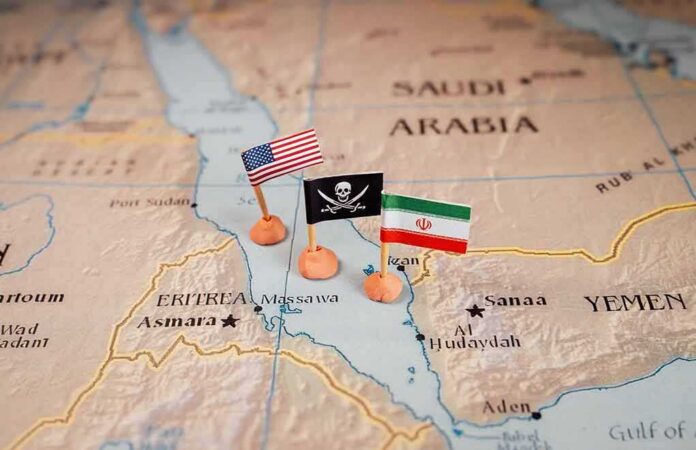
Iran is warning Egypt that joining Saudi Arabia’s fight against Yemen’s Houthi rebels could make an already dangerous war even harder to control.
Quick Take
- Iran’s foreign minister said any foreign intervention would “complicate matters” in Yemen.
- Egypt’s president asked parliament to approve helping defend Saudi Arabia if Riyadh asks for it.
- Egypt insists any role would be defensive only, not an attack inside Yemen.
- Houthi strikes on Saudi cities, airports, and oil sites set off the crisis.
- History shows outside countries joining Yemen’s war have often widened it instead of ending it.
Iran’s Foreign Minister Issues Direct Warning
Iranian Foreign Minister Abbas Araghchi spoke on Iraqi state television on October 20, 2026. He said any outside country joining the war would make the situation “more difficult.” Araghchi urged Egypt to stay out of the fight between Saudi Arabia and Yemen’s Houthi movement, which Iran backs. His comment was direct and on the record, not an anonymous leak or rumor.
The warning came as Houthi forces kept attacking Saudi Arabia. Fighters launched strikes on Riyadh, Saudi airports, and oil facilities in the days before Araghchi spoke. Those attacks pushed Egypt’s government to consider stepping in to help its Gulf ally, raising the stakes for a conflict that has dragged on for more than a decade.
Egypt Weighs a Military Role, But Insists It’s Defensive
Egyptian President Abdel Fattah el-Sisi asked parliament for approval to help defend Saudi Arabia if Riyadh requests it. He said Egypt would “take any measure to protect” the kingdom. But Sisi was careful with his words, telling reporters, “I’m not talking about fighting anyone or attacking anyone. We are speaking only about defense.”
Egypt’s National Defense Council echoed that message, saying the country would offer “all necessary and possible forms of support” to protect Saudi security, resources, and holy sites. The council did not spell out exactly what that support would look like. Analysts say options range from air-defense help to protecting Red Sea shipping routes near the Suez Canal.
Why Egypt’s Role Matters Beyond Yemen
Egypt controls the Suez Canal, a major route for global trade and Saudi oil shipments. That gives Cairo a direct stake in keeping the Red Sea safe, separate from any decision about fighting inside Yemen. Egypt and Saudi Arabia share an interest in protecting shipping lanes, which Houthi attacks have already disrupted.
Egypt’s own position reflects a real dilemma. The country wants to back Saudi Arabia without getting pulled into a war that could threaten its own interests. A full troop deployment into Yemen looks unlikely, military analysts say, with more limited support such as naval or air-defense assistance seen as far more probable.
A Pattern Seen Before in Yemen’s Long War
Researchers who study Yemen’s conflict note a familiar pattern. Outside powers tend to describe their own involvement as defensive while calling a rival’s involvement dangerous escalation. Saudi Arabia’s own intervention, launched in 2015 to restore Yemen’s government, started small and grew over time instead of ending the fighting.
Today on Reason2Resist:
Egypt's Parliament has delayed a decision on the transfer of Egyptian troops to Saudi Arabia after Iran delivered a stark warning to Egypt.
Meanwhile, Ansar Allah struck a Saudi military training camp in southern Yemen, killing and wounding hundreds.…
— Dimitri Lascaris (@dimitrilascaris) October 20, 2026
Iran’s position carries its own complications. Tehran is widely described as backing the Houthis while also offering to mediate peace talks between Saudi Arabia and the rebel group. That dual role lets critics argue Iran’s warning about Egypt serves its own side, even if the underlying worry about wider war is shared by many.
What Comes Next
Egypt’s parliament has not finalized any deployment, and Saudi Arabia has not formally requested troops. The situation remains fluid, with reports describing possible support ranging from defensive missile systems to shared security patrols. No side has confirmed a final plan, leaving the biggest question unanswered: whether Middle Eastern countries can keep this war from spreading further, or whether history will repeat itself.
Sources:
insiderpaper.com, economictimes.com, english.aaj.tv, iranintl.com, aljazeera.com, trtworld.com, reuters.com, yahoo.com
© standardheadlines.com 2026. All rights reserved.