
A U.S. Air Force service member died after falling during a planned rappel into a packed college football stadium, turning a patriotic tribute into a fatal emergency confirmed by the Air Force.
Story Snapshot
- Nellis Air Force Base confirmed the service member died from injuries after a fall during a pregame rappel.
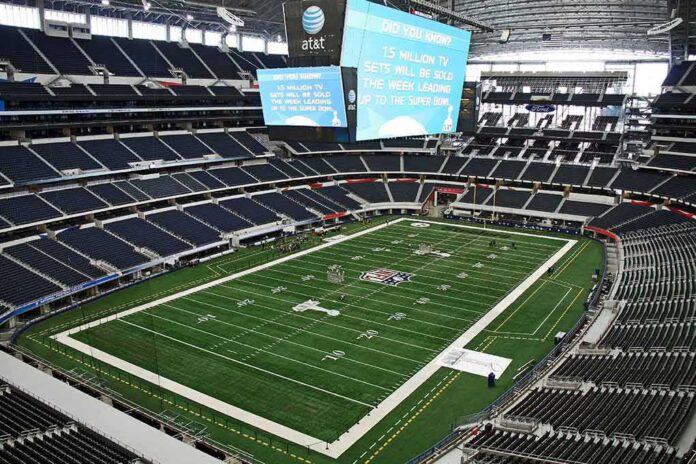
- The fall happened at San Antonio’s Alamodome before the UTSA–Navy game, during a military salute event.
- Local outlets reported four were set to rappel; one appeared to descend out of control and hit the field.
- Officials say the incident is under investigation; no name or cause has been released.
What officials confirmed about the fatal fall
Nellis Air Force Base said a service member assigned to the 6th Combat Training Squadron, Detachment 2, died from injuries after a fall. The statement, reported on October 18, carries two key facts: the Air Force member’s unit and the confirmation of death. Officials also said the incident remains under investigation and that more details will come later. The Air Force did not release the person’s name, rank, or age, citing ongoing notifications and reviews.
The fall took place at the Alamodome in San Antonio before the University of Texas at San Antonio played Navy. Texas Public Radio reported that a service member fell from the rafters during pregame activities. A San Antonio Fire Department spokesperson said one person was transported as a top-priority patient from the scene. The game was part of UTSA’s annual military salute, which often includes ceremony, displays, and service member participation on the field.
What witnesses and local reports described at the stadium
The San Antonio Express-News reported that four personnel were scheduled to rappel into the stadium before the coin toss. One participant appeared to descend in an uncontrolled way and strike the turf, according to the outlet’s description from the field. Fans and players saw the incident unfold in real time, and medical teams responded on the field within minutes. Early reports described hospitalization; the Air Force later confirmed the death the next day.
Officials have not stated what caused the rapid descent. Reports do not say whether gear issues, rigging problems, a medical event, or human error played a role. The Air Force has not issued a mishap classification, safety memo, or investigative timeline in public reporting so far. That is typical at this early stage, when units secure equipment, collect accounts, and start safety and command inquiries. Investigators will also consider training, venue coordination, and supervision.
Why the context around rope demonstrations matters
Past reviews of rappelling mishaps in military, police, and fire settings point to patterns that go beyond a single “slip.” Researchers and trainers have flagged gaps in skills, hazard checks, supervision, and adherence to guidance as common threads in fatal events. One training review for field operations noted that late or improper braking often drives loss of control during descent, underscoring why procedures, backups, and clear roles are vital during public demonstrations.
Stadium settings add more layers. Entertainment and event safety rules call for shared planning, approved hardware, and defined fall protection. Standards for rigging work at height stress qualified design and rescue plans before anyone steps off an edge. Those norms exist to manage risk when multiple parties share a venue, including the stadium operator, event staff, contractors, and outside teams like the military during special ceremonies.
The public stakes when ceremony meets risk
Americans honor service members at games because they value duty and sacrifice. That is why a fatal fall in front of families and veterans hits so hard. People across the political spectrum worry that too many systems now put show before safety, process before results, and image before care. This tragedy raises fair questions about planning, gear checks, and decision-making at large events without blaming any one party before the facts are out. An official inquiry should address each link in the chain.
U.S. Air Force service member dies after rappelling accident at the Alamodome in San Antonio during a pregame military demonstration before UTSA–Navy. The airman was assigned to the 6th Combat Training Squadron, Detachment 2. The incident is under investigation; the member's…
— MR.GIBSON (@ExitDesk) October 18, 2026
Next steps likely include formal safety and command investigations, venue cooperation with requests, and potential reviews of training and authorization for such displays. Strong, transparent answers can honor the fallen by fixing what went wrong, if anything did. Until then, the most concrete facts are clear: an Air Force service member died after a fall during a planned rappel at a college game, and officials are working to learn exactly how it happened.
Sources:
taskandpurpose.com, essentiallysports.com, demokratis.co.id, apps.dtic.mil, myusf.usfca.edu
© standardheadlines.com 2026. All rights reserved.