
Italy’s new Security Decree raises police powers while Milan counts injuries, arrests, and burned storefronts from violent cost-of-living riots.
Story Snapshot
- Cost-of-living protests in Milan turned violent, with looting, fires, and injured officers.
- Prime Minister Giorgia Meloni backed police and vowed to separate protest from violence.
- Parliament passed a Security Decree with tougher penalties and support for officers.
- A plan to allow brief preventive detention of minors drew civil-liberties concerns.
What Happened In Milan’s Streets
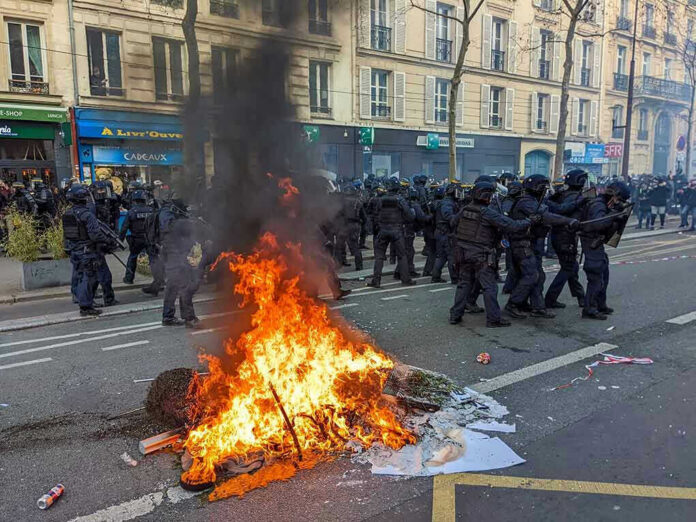
Associated Press reporting described central Milan shaken by violent clashes during cost-of-living protests. Rioters looted shops, lit fires, and forced police to clear Piazza del Duomo and the Galleria Vittorio Emanuele II. Authorities detained about 50 people, and at least two officers were hurt, as the city center shut down amid chaos. The New York Times later reported a higher officer injury count, including a cobblestone strike to the head of one officer, underscoring the risk on the ground.
Local unrest followed a broader weekend of protest in northern and southern cities. Police used tear gas and water cannons after masked youths hurled bottles and fireworks, according to multiple outlets. Reports differ on totals for detainees, arrests, and injuries, which may reflect changing counts across locations and time. The gap in figures remains unresolved by the sources, leaving a limited, but clear, picture of serious street violence and a forceful police response.
Meloni’s Message And The Government’s Legal Path
Prime Minister Giorgia Meloni drew a firm line between peaceful protest and crime. She wrote that protesting is a right, but “setting our cities ablaze is not,” and condemned hooligans who hijack protests to sow chaos and attack police. Her cabinet pushed a security package that built on that stance. Parliament then advanced and approved a Security Decree that increases penalties for vandalism and disruptive sit-ins, broadens police powers, and covers legal fees for investigated officers up to ten thousand euros.
Politico reported the Security Decree passed the Senate by a margin of 109 to 69 after earlier lower-house approval. The measure is controversial, both for its tougher sanctions and for expanding law-enforcement tools. Supporters frame it as a needed answer to sudden disorder in major cities. Critics argue it risks pushing beyond ordinary criminal law and could chill lawful assembly, especially during tense economic times when many want to show dissent in public.
New Powers And The Debate Over Minors
Reuters reported that the government also plans to let police detain people under age eighteen at stations for up to twelve hours based on evidence of danger, without proof of a completed crime. The plan responds to reports that many detainees were minors during the Milan unrest, and to fears that youth groups could escalate violence. The proposal sparked rights concerns because it is preventive, relies on risk judgments, and raises due-process questions for children and families.
Rights groups and legal scholars often ask whether preventive powers are precise, necessary, and supervised. The research here does not show detailed safeguards, review steps, or error rates for minor detentions. It also does not show data that the new powers cut future violence. That gap matters to people across the spectrum who worry that governments take more power during crises, then use it later against peaceful opponents, not just against violent actors.
Why This Matters To Voters Everywhere
Many Americans see a pattern they know well. City violence prompts leaders to promise order fast, but deeper problems—like high prices and weak services—still fuel anger. Italy’s move mirrors that tension. The decree answers real violence that harmed officers and shopkeepers. Yet it also expands state power in ways that could touch many more people than the rioters, especially youth. That tradeoff should be judged with clear data, tight rules, and public oversight.
What To Watch Next
Watch for a unified incident count that reconciles stops, detentions, formal arrests, and injuries. Look for body-camera reviews and court outcomes that test whether force and charges were proportionate. Track whether preventive detention of minors includes strict evidence standards, quick review, and limits on repeat use. Finally, watch if the decree reduces violent protest without shrinking space for peaceful assembly. Those answers will show if the policy fixed a crisis or merely widened state reach.
Sources:
youtube.com, bbc.com, dw.com, reuters.com, apnews.com, politico.eu
© standardheadlines.com 2026. All rights reserved.