

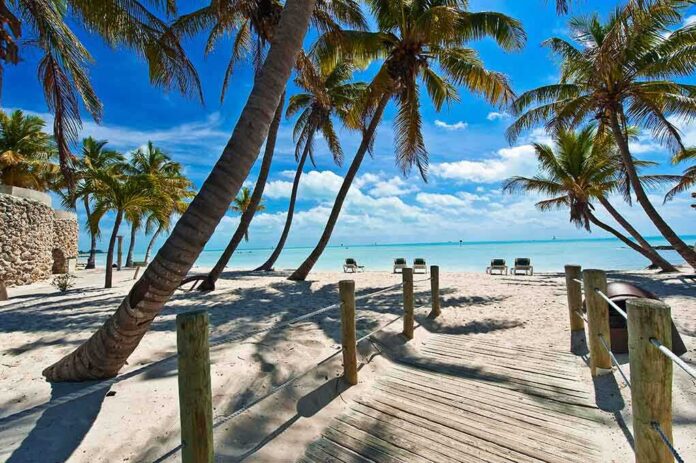
Imagine escaping to a place where the only sounds are the whispers of the wind and the distant call of nature, far from the noise of civilization.
Story Snapshot
- Six remote U.S. destinations offer unparalleled solitude and unique experiences.
- Locations include underwater hotels and historic forts, accessible only by special means.
- Destinations were originally utilitarian sites now repurposed for tourism.
- Highlights the trend of seeking isolation as a form of luxury travel.
Remote Retreats with a Story
In an era where solitude has become a rare luxury, six remote U.S. destinations offer an escape unlike any other. These locations, including Jules’ Undersea Lodge in Florida and the New Camaldoli Hermitage in California, are characterized by their extreme isolation and the unique access required to reach them. Once utilitarian or monastic sites, these places have been transformed into destinations for those looking to disconnect from the bustling world and reconnect with themselves.
Jules’ Undersea Lodge, originally a 1970s research habitat, now serves as the world’s first underwater hotel. Accessible only by scuba diving, it invites guests into an aquatic world of serenity. Similarly, the New Camaldoli Hermitage in Big Sur offers monastic silence amidst breathtaking landscapes, appealing to those seeking spiritual retreat. These destinations highlight a growing trend where isolation is not just an escape but a sought-after experience.
The Allure of Isolation
Fort Jefferson in the Dry Tortugas National Park, a former military outpost turned national park, is accessible only by seaplane or boat. Visitors can explore its historical ruins and natural beauty, far from the mainland’s reach. Fire lookout towers, once crucial for wildfire detection, now provide adventurous accommodations for those willing to trek to remote locations. These structures, perched high above forests, offer panoramic views and a connection with nature that is hard to find elsewhere.
Everglades National Park, with its vast wetlands, attracts kayakers and campers eager to experience its untouched wilderness. Similarly, the Frying Pan Tower off the coast of North Carolina, a decommissioned Coast Guard light station, offers a unique adventure tourism experience amidst the waves. These sites exemplify the idea that isolation is not just about being alone but about experiencing something rare and precious.
Reimagining the Past
The transformation of these sites from utilitarian to tourist destinations reflects a broader trend of repurposing infrastructure for new uses. This adaptive reuse is not just a testament to human ingenuity but a way to preserve historical and scientific sites. The Marine Resources Development Foundation’s renovation of Jules’ Undersea Lodge and the Frying Pan Tower nonprofit’s restoration efforts are prime examples of how these locations are being preserved for future generations.
These initiatives not only support local economies through niche tourism but also raise awareness about the importance of conservation. However, as interest in these unique experiences grows, there is a need for sustainable management to ensure that these fragile ecosystems are not overwhelmed by visitors. It’s a delicate balance between sharing these wonders with the world and preserving them for the future.
Sources:
Jules’ Undersea Lodge official history