
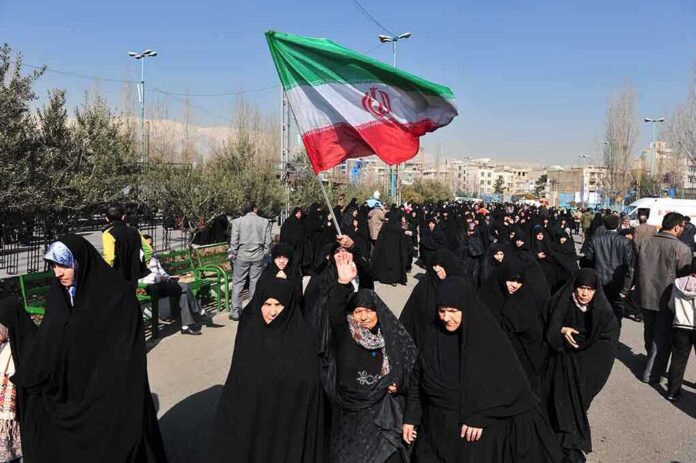
A state-run funeral turned into a stage where a speaker asked why Donald Trump was still alive—and the crowd roared.
Story Snapshot
- Official funeral events featured “Death to Trump” chants and kill posters aimed at Americans.
- A funeral speaker questioned Trump’s survival from the main stage, drawing cheers.
- Mourners hurled stones at Trump imagery and waved vengeance flags in Tehran.
- Iran’s military warned the United States and Israel against attacks during the funeral period.
Funeral Procession Becomes A Political Message
Millions filled Tehran’s streets for Ali Khamenei’s funeral as state organizers blended grief with defiance. Chants of “Death to America” and “Death to Israel” surged, but a sharper edge cut through: direct calls for the death of Donald Trump. On the main stage, poet Mohammad Rasoulinia asked why Trump was still alive. The crowd cheered hard, signaling a threat wrapped as tribute. Placards named Trump and other figures, while red “vengeance” flags rippled above the route.
Scenes were visceral and staged for impact. Under a bridge, mourners stoned a billboard that showed Trump with a bullet aimed at his head, a grim echo of the “stoning the devil” motif many Iranians know from faith rituals. Posters demanded revenge and, in at least one case, called to “Kill Trump.” Funeral managers did not hide these displays. Cameras captured them. State-linked media amplified them. The line between public rage and official message narrowed to a hair.
Hostility Was Not Subtle, And It Was Organized
Organizers controlled access points, stage order, and security perimeters. They also placed speakers who pushed vengeance themes to a national and global audience. That level of curation matters. When a speaker on the state platform targets a former United States president by name, many Americans will hear more than grief. They will hear policy. While some argue these are only mourners, the setting, the staging, and the state-linked distribution suggest intent to warn Washington and rally Iran’s base.
Iran’s military signaled hard lines at the same time. A senior commander warned the United States and Israel against any attack as the country moved through the funeral period. Authorities tightened security and restricted airspace over key cities. This was not a free-for-all. It was a managed national rite under wartime rules, presented with the language of deterrence. The message reached beyond the crowd and aimed squarely at American decision makers.
How To Read The Threats Without Overreading Them
American audiences see kill lists and chants and think orders. Iranian officials often argue the chants are symbolic, not operational. Both things can be true at once. The funeral was designed to vent anger and to shape fear. That does not prove an imminent plot. It does show a regime willing to flirt with direct threats in full view of the world. From a conservative lens, prudence says treat public death chants for a former president as a serious warning, not theater.
Security professionals separate capability from intent. Iran and its proxies have both. The funeral showed intent to intimidate, at minimum. The direct question from the stage about why Trump is alive stands out because it lowers the guardrails. If leaders wanted distance from that line, they could have enforced it. They did not. That choice aligns with a strategy that keeps opponents guessing and puts pressure on the United States to harden defenses and think twice.
What This Means For U.S. Policy And Politics Now
Policy makers should respond with clarity and calm. Strength deters; panic invites missteps. Raise protection for named targets. Signal that attacks on American leaders or citizens will face decisive costs. Keep channels for de-escalation open, but do not pretend the threats were lost in translation. On the domestic side, voters will judge any White House by a simple measure: did you keep Americans safe while avoiding a wider war we did not choose? That is common sense.
Khamenei Mourners Hold Hit List Signs Targeting Trump, Americans as Warren Staffer Attends Funeralhttps://t.co/G4vV14eHMH
— PJ Media (@PJMedia_com) July 6, 2026
Two final notes anchor the stakes. First, social media clips can distort scale, but major outlets and wire services confirmed the core scenes: chants, kill posters, and staged hostility toward Trump and Americans. Second, Iran’s warning to the United States and Israel during the funeral window shows the regime expected tension and planned for it. The funeral was a signal. The United States should answer with firm red lines, layered defenses, and a cool head that neither blinks nor blusters.
Sources:
pjmedia.com, reuters.com, counterterrorismgroup.com
© standardheadlines.com 2026. All rights reserved.