
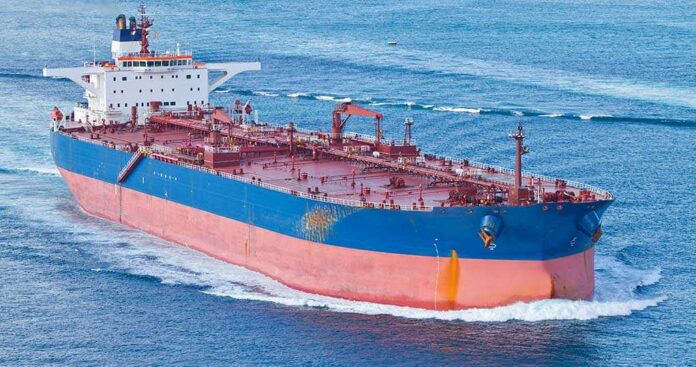
Two giant Iranian tankers just slipped past a fading U.S. blockade in the Strait of Hormuz — and the proof is already staring you in the face every time you fill up your car.
Story Snapshot
- Iran’s first crude exports in two months broke through the U.S. blockade line, moving millions of barrels of oil.[3]
- President Trump ordered the Strait “toll free” and began lifting naval and oil sanctions pressure on Tehran.[6]
- Gas and crude prices dipped fast, but deep damage and murky deal terms make this relief fragile.[4]
- Israel, G7 allies, and Iran’s hardliners all threaten to blow up this opening — politically or literally.[1]
The moment two tankers told you more than any press conference
News anchors spent months talking about war, blockades, and “closure of Hormuz.” But the real turning point showed up on tracking screens, not TV chyrons. TankerTrackers, a private ship-monitoring group, spotted two massive National Iranian Tanker Company vessels, the Diona and Hero 2, slipping out past the U.S. Navy blockade perimeter with about 3.8 million barrels of crude onboard.[3] Those ship tracks confirmed something Washington and Tehran still refuse to spell out clearly in public.
That breakout marked Iran’s first crude oil exports in two months, after traffic through Hormuz plunged during intense fighting and threats.[3] For weeks, tanker owners had parked ships or routed around the Gulf rather than risk missiles, drones, or seizure. Now, at least for a few days, the math changed. If a big, slow, unarmed tanker can move again, insurers recalculate risk, traders smell opportunity, and oil markets respond far faster than diplomats at any resort in Switzerland.[4]
What Trump actually changed, and why it matters at the pump
The Diona and Hero 2 did not move because Iran suddenly became friendly. They moved because the White House flipped a switch. President Donald Trump went on Truth Social and declared a “toll free opening of the Strait of Hormuz” and the “immediate removal of the United States Naval blockade.”[6] A senior U.S. official then told reporters that a framework deal included a sanctions waiver for Iranian oil sales, plus the banking, shipping, and insurance links needed to move that crude.[2]
The Wall Street Journal reported that Washington will allow Iran to resume oil and fuel exports under this framework, including key services that make any sale possible.[4] Within hours, Brent crude dropped, with some reports citing a fall of almost five percent as traders priced in extra barrels returning to market.[1] For American drivers, that does not mean $2 gas is back. But it does mean one brutal source of pressure on fuel prices just eased, at least for now, because U.S. policy shifted from maximum squeeze to managed breathing room.
The fine print no one has seen — and why allies are furious
European leaders received the news like a neighbor who hears about a remodel only after the bulldozer shows up next door. The core deal, a Memorandum of Understanding between the United States and Iran, still has not been released in full.[1] G7 partners complain they are being asked to support a major strategic turn without seeing the actual terms on nuclear limits, sanctions relief, or how long the ceasefire really binds either side.[1]
That secrecy matters because the White House frames this as a “ceasefire, not a nuclear agreement.”[6] Former diplomats warn that label gives both sides room to walk away or cheat without technically breaking a treaty. From a conservative, common-sense view, that sounds like a classic Washington half-step: just enough openness to move markets and claim a win, but not enough verification to trust for the long haul. Without clear, published terms, Americans and allies are asked to take a lot on faith — and recent history with Iran gives little reason to do that.
Why this “opening” may not feel like peace on the ground
Even if every word of the deal holds, steel and concrete do not care about press statements. The Ros Leafon liquefied natural gas export plant and other key facilities took heavy damage, with experts warning repairs could take three to five years.[6] Clearing mines and debris from the Strait will also take time and real money. That means the return of Iranian barrels will be limited, choppy, and vulnerable to any new incident, not a flood that washes away high prices overnight.
Iran’s money problems also remain severe. Of an estimated one hundred billion dollars in frozen assets, reports suggest Tehran may see access to only about fourteen billion dollars, and even that mostly in controlled forms tied to goods, not free cash transfers.[6] That is relief, not rescue. For American conservatives, this could be the narrow zone where leverage still exists: enough economic oxygen to keep Iran at the table, but not enough to fund a big new nuclear sprint or terror surge without detection.
Three ways this can still go very wrong very fast
First, Israel’s government sees this deal as dangerous and may try to wreck it with further strikes on Hezbollah or Iranian-linked targets in Lebanon and Syria.[1] Any misstep that kills many civilians or hits a major energy asset could push Iran’s hardliners to slam Hormuz shut again, no matter what the paper in Switzerland says. Second, Iran’s own leaders talk about charging transit fees, which clashes with Trump’s demand for a toll-free Strait.[1] That fight blends money, pride, and law — a messy mix.
Third, markets do not trust the 60-day timeline for a “final” agreement.[1][13] Analysts expect delays, extensions, and political games in Washington, Tehran, and Jerusalem. In plain language, traders assume this ceasefire is a trial separation, not a real marriage. Media outlets already frame the moment as “fragile,” “temporary,” and “reversible.”[1][6] That skepticism fits the long story of U.S.–Iran relations, where big headlines often hide small, shaky changes.[13] For anyone filling up a tank, the message is simple: enjoy lower prices, but do not count on them lasting.
Sources:
[1] Web – Iranian tankers exit US blockade zone ahead of peace talks
[2] Web – Iranian tankers exit US blockade zone ahead of peace talks
[3] Web – Iran says talks on final US deal to begin this week
[4] Web – Iranian tankers exit US blockade zone before talks to end war
[6] Web – Iranian tankers exit US blockade zone ahead of talks
[13] Web – In Turn From Iran Talks to War, U.S. Casts Doubt on Diplomacy
© standardheadlines.com 2026. All rights reserved.