

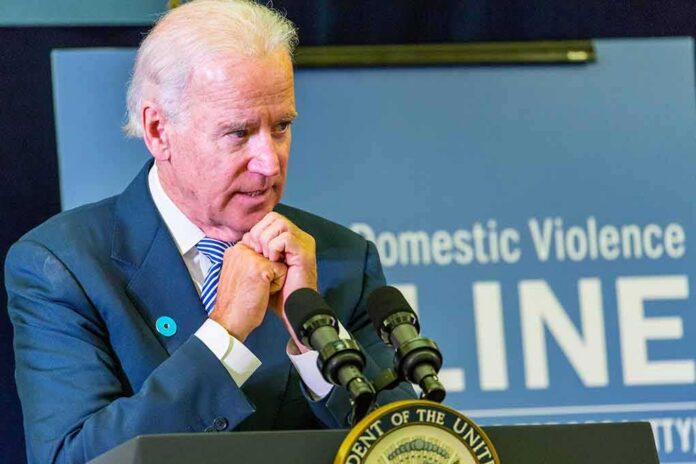
A federal appeals court has cleared the way for the release of Joe Biden’s long-hidden ghostwriter recordings, putting 70 hours of private interviews on the verge of a public dump and stoking fresh anger over how powerful politicians shield information from the people they serve.
Story Snapshot
- A D.C. appeals court ruled that public interest in Biden’s 2016–2017 ghostwriter interviews outweighs his claimed privacy rights.
- The Heritage Foundation fought for the tapes under the Freedom of Information Act, seeking insight into Biden’s handling of classified material and his memory.
- Federal judges said redactions can protect Biden’s remaining privacy while still honoring the law’s demand for transparency.
- Biden has now dropped his lawsuit, opening the door for the Justice Department to release the recordings to the public.
Court Rulings Put Biden’s Private Interviews On Public Track
Federal judges in Washington have now twice ruled that the public has a strong right to see and hear former President Joe Biden’s recorded talks with his ghostwriter for his 2017 memoir. A Trump-appointed district judge, Dabney Friedrich, first rejected Biden’s attempt to stop the Justice Department from turning over the audio and transcripts to the conservative Heritage Foundation, saying the public interest and the Freedom of Information Act’s push for openness outweigh his reduced privacy claims as a former president.
The United States Court of Appeals for the District of Columbia Circuit then backed up that view in a 2–1 decision, holding that the “substantial” public interest in the material is greater than any remaining privacy concerns once the Justice Department’s redactions are applied. Two judges, Chief Judge Sri Srinivasan and Judge Gregory Katsas, agreed that the ghostwriter materials are government records subject to Freedom of Information Act disclosure, while Judge Florence Pan dissented and would have granted Biden an injunction to keep the files sealed.
How The Heritage Foundation Forced The Issue
The Heritage Foundation, a conservative policy group, requested the Biden ghostwriter materials under the Freedom of Information Act as part of a wider push to examine Biden’s handling of classified documents and his memory. The recordings, about 70 hours of conversations with writer Mark Zwonitzer, became evidence in Special Counsel Robert Hur’s investigation into Biden’s retention of classified papers after his vice presidency. Heritage argued that when private interviews become part of a federal criminal probe, transparency and accountability demands override typical privacy expectations.
The Justice Department did not deny the existence of the records and prepared heavily redacted transcripts and audio files that removed references to Biden’s family and other personal details. Judge Friedrich reviewed those redactions herself and concluded they “do not include information about Biden’s family or other private individuals,” which helped her decide that any remaining privacy impact was limited and could not overcome the public’s right to know. For many Americans on both the right and the left, this fight looks less like a niche records dispute and more like another example of a political insider trying to control the story while citizens have to sue their own government just to see the truth.
Biden’s Privacy Arguments And Why They Failed
Biden’s lawyers claimed that the ghostwriter sessions were deeply personal, done at home and meant to help him tell the story of his late son Beau and his family grief, not to create material for public release. They argued that turning the recordings over would chill future presidents and public figures from speaking openly to writers, and that Freedom of Information Act was not meant to strip away basic privacy from someone sharing intimate memories. They also stressed that Biden had cooperated with the special counsel on the understanding that the audio would remain confidential.
Judges accepted that those privacy interests were real but said they had to be weighed against Biden’s status and the role the recordings played in a federal investigation. Both Friedrich and the appeals majority pointed to strong redactions as a way to protect what is truly private while still honoring the law’s goal of government transparency. When a president’s own words about documents and decision-making become evidence, courts are increasingly signaling that they belong more to the public record than to a private diary, especially when trust in politicians and institutions is already badly strained on all sides.
What Happens Next And Why It Matters Beyond Biden
After losing in district court and then seeing the appeals court refuse to give him emergency protection, Biden initially sought more time through temporary injunctions but has now dropped his lawsuit rather than pursue further review. That move clears the path for the Trump administration’s Justice Department to release the redacted tapes and transcripts to Heritage and, eventually, the broader public. House Republicans have also pressed for access, saying they want to examine Biden’s memory and decision-making years before his presidency, though the Court treated their requests separately.
For many frustrated Americans, this case taps into a deeper worry: that people at the top can hide facts about investigations, health, and judgment while everyday citizens face harsh transparency rules and little mercy from the state. The Heritage Foundation gains a political win and new material to critique Biden, but liberals who are tired of secrecy in government may still welcome seeing what a former president told investigators behind closed doors. The message from the courts is simple but powerful: when leaders are under federal scrutiny, the records belong to the public, not to the political class that wants to manage the narrative.
Sources:
twitchy.com, nbcnews.com, nytimes.com, foxnews.com, youtube.com, cbsnews.com, npr.org, axios.com, politico.com
© standardheadlines.com 2026. All rights reserved.