

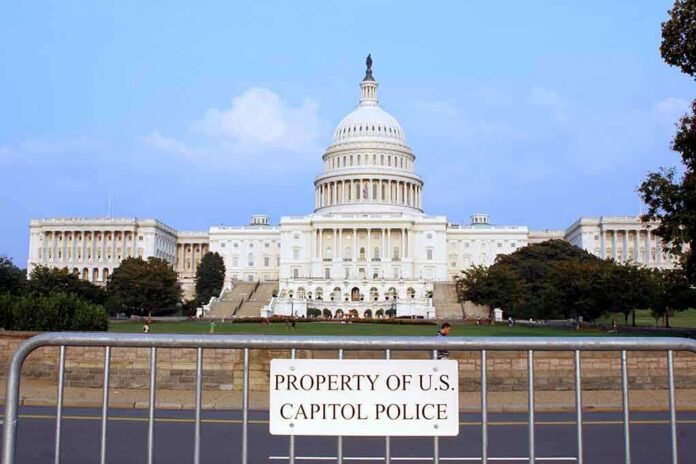
A Republican lawmaker moved to impeach President Trump’s defense chief over the Iran war, forcing Congress to confront war powers head-on.
Story Snapshot
- Rep. Thomas Massie filed eight impeachment articles against Defense Secretary Pete Hegseth over alleged illegal war actions.
- The resolution alleges Hegseth escalated hostilities against Iran without clear approval from Congress.
- Massie says he will force a House vote on the charges, ensuring a recorded decision.
- The case also revives a free speech and discipline clash tied to Hegseth’s censure of Sen. Mark Kelly.
What Massie Filed And Why It Matters Now
Rep. Thomas Massie, a Kentucky Republican, introduced eight articles of impeachment against Secretary of Defense Pete Hegseth. Massie’s resolution claims Hegseth took part in starting and escalating military action against Iran without a declaration of war or specific law from Congress. The filing says this broke Article I of the Constitution and the War Powers Resolution. The step is rare within a president’s party and puts a key war-power fight on the House floor for a direct test.
Massie’s office says he will force a vote, so members must go on record. That move raises the stakes for both parties and for independents who want Congress to check executive power. The charges reach beyond war claims. They include alleged failures in civilian harm review and claims of retaliating against speech. The vote’s outcome is not certain, but the effort shows rising frustration with how Washington handles war decisions and accountability.
The Core War Powers Dispute Explained
H.Res.1177 centers on a simple question with big weight: who decides when the nation goes to war? Congress holds the power to declare war, but presidents often use force first and seek backing later. The War Powers Resolution sets timelines and reporting rules, but courts rarely settle these clashes. When normal checks fail, Congress can use money, oversight, and impeachment as backstops. Legal scholars describe impeachment as the strongest check when other tools fall short.
Supporters of the resolution argue that the Iran fight crossed clear lines without timely and specific approval. Critics may answer that the commander in chief must act fast to protect the nation. Past fights show both claims appear whenever force is used without a fresh vote. That repeating pattern is why this case matters. It is not only about one secretary. It is about whether Congress will reassert its role in decisions of war and peace.
Free Speech, Discipline, And The Kelly Censure
Massie’s filing also points to a clash over speech and military order. In January, Hegseth issued a Secretarial Letter of Censure to Senator Mark Kelly, a retired Navy officer. Hegseth said Kelly took part in a video that urged service members to resist unlawful orders and that those remarks hurt good order and discipline. The Department said that justified the censure under military standards, while critics called it retaliation against protected speech.
Rep. Thomas Massie, R-Ky., introduced eight articles of impeachment against Defense Secretary Pete Hegseth Tuesday, accusing him of conducting unauthorized wars, disregarding civilian-protection laws and using the Pentagon to retaliate against a member of Congress.…
— The Well News (@TheWellNews) September 15, 2026
That dispute now feeds the impeachment debate. Backers of the censure say the military must keep strict lines so troops follow only lawful orders and avoid chaos. Opponents warn that punishing an elected official’s warnings about unlawful orders risks chilling speech and hiding misconduct. The House must decide whether Hegseth’s actions fit proper command discipline or crossed into unlawful suppression. That choice sits alongside the war-power charges in the same vote.
Why This Fight Resonates Beyond Partisanship
Many Americans across the spectrum feel shut out as leaders make high-cost choices without clear consent. Wars stretch on. Bills pile up. The rules feel flexible for the powerful and rigid for everyone else. This case reaches those nerves. A House vote on impeachment is a blunt tool, but it forces daylight. Members must defend war authority claims in public, not just in talking points or late-night deals. That is a step toward the accountability many say is missing.
What Comes Next In The House
Procedurally, the House can table, refer, or debate and vote on the articles. Massie’s maneuver ensures floor action of some kind. If the House adopts any article, the process moves to the Senate for trial. If the House rejects them, the episode still sets a marker on war powers and civil-military lines. Either way, the record will show where each member stands on the core question: how the nation should start, run, and oversee war in the twenty-first century.
Sources:
cbsnews.com, politico.com, massie.house.gov, congress.gov, washingtonpost.com, english.news.cn
© standardheadlines.com 2026. All rights reserved.