
A rare Ebola strain with no approved vaccine has finally reached human testing, raising hope and hard questions about how fast science moves when the world is caught off guard.
Story Snapshot
- A volunteer in the United Kingdom just became the first person to get a new Bundibugyo Ebola vaccine.
- The shot targets a deadly outbreak in the Democratic Republic of the Congo and Uganda that has killed over 1,000 people.
- Health agencies say there are still no approved vaccines or treatments for this strain, making the trial important but very early.
- The rapid vaccine push shows what science can do in a crisis, and also how unprepared the global system was for a known threat.
First Volunteer Receives New Bundibugyo Ebola Vaccine
Oxford University said a 37-year-old volunteer in Oxford, England was injected on Friday with the first dose of a new vaccine aimed at the Bundibugyo strain of Ebola. The vaccine, called ChAdOx1 BDBV, is part of a phase 1 trial that will test safety and the immune response in about 50 healthy adults ages 18 to 55. This is the first time any Bundibugyo-specific Ebola vaccine has been given to a person, marking a clear scientific milestone in the middle of an ongoing emergency.
The candidate was developed by the Oxford Vaccine Group with backing from the Coalition for Epidemic Preparedness Innovations. After conditional approval from the United Kingdom’s Medicines and Healthcare products Regulatory Agency, Oxford began recruiting volunteers and moved quickly to first vaccinations. The trial is not meant to prove full protection yet; it is designed to answer basic questions about whether the shot is safe and triggers the kind of immune response that later, larger trials can build on.
A Fast-Spreading Outbreak With No Approved Vaccine
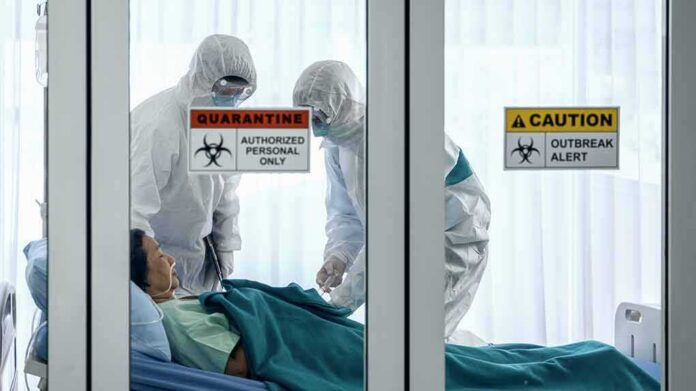
The Bundibugyo outbreak driving this research is not a distant problem; it is an active public health emergency in the Democratic Republic of the Congo and Uganda. World Health Organization updates describe sustained transmission with more than 1,000 deaths since the outbreak emerged in May, and over 1,400 confirmed cases in the Democratic Republic of the Congo alone in early reports. Uganda has also reported cases and deaths linked to cross-border movement, while France has recorded at least one imported case, showing how quickly local crises can reach wider regions.
The World Health Organization has formally classified this event as a public health emergency of international concern, its highest alert level. Africa’s public health agency has called it a “public health emergency of continental security,” stressing that the outbreak threatens not only health systems but also political and economic stability in the region. Reports from the United Nations say the epidemic is spreading faster than health workers can contain it, despite intense efforts to trace contacts, isolate patients, and support fragile clinics in conflict zones.
Why This Vaccine Matters — And What It Does Not Yet Prove
For this specific Ebola strain, Bundibugyo virus disease, there are no approved vaccines or specific treatments. That makes this new trial feel like a breakthrough, and in one sense it is: we have moved from “no tools” to “at least one tool beginning human testing.” But health agencies stress that the current outbreak must still be controlled with basic public health measures like rapid case finding, isolation, safe burials, and strong local engagement. The vaccine is an important hope, not a finished solution.
Experts also warn that early-phase trials mainly show safety and immune response, not real-world protection. Past Ebola experience shows why this matters. The Ervebo vaccine against the Zaire strain only became trusted after field data showed it cut risk for exposed people by about 84 percent. For Bundibugyo, there is not yet human evidence that any shot prevents illness. This trial sits at the very first step in that path, and its results will need to be shared clearly to avoid either hype or panic as the story spreads.
Lessons About Outbreak Preparedness and Global Priorities
This outbreak exposes a deeper problem that bothers people across the political spectrum: the world knew Bundibugyo existed, yet came into 2026 with no approved vaccine or treatment. WHO and partners now say control “relies heavily” on the same tools used decades ago—contact tracing, isolation, and basic supportive care—because modern medical countermeasures were never finished. That looks, to many citizens, like another case where global health institutions and national governments reacted only after a crisis became impossible to ignore.
A major Ebola outbreak is currently spreading across the Democratic Republic of the Congo and Uganda, prompting the World Health Organization to declare a Public Health Emergency of International Concern. This 2026 epidemic is being driven by the rare Bundibugyo virus strain pic.twitter.com/RlPdcEoRhN
— Afridiaspo.net (@Afri_diaspo) July 23, 2026
At the same time, the rapid launch of this trial shows what the science world can do when the alarm finally rings. Within weeks, funding flowed, a viral vector vaccine was designed, regulators reviewed it, and the first volunteer rolled up a sleeve in Oxford. Yet the people facing daily danger are not in Oxford or London; they are families and health workers in conflict-hit parts of the Democratic Republic of the Congo and border areas of Uganda. For many Americans and Europeans already skeptical of “global elites,” it reinforces a familiar worry: lifesaving tools seem to appear faster in rich laboratories than in the villages where lives are being lost.
Sources:
insiderpaper.com, who.int, news.un.org, msf.org, eeas.europa.eu, cdc.gov, reliefweb.int
© standardheadlines.com 2026. All rights reserved.