

BMW is set to shrink by about 8,000 jobs, but the way it plans to do it matters as much as the number.
Quick Take
- BMW says the cuts will run through the end of 2027 and will hit mostly non-production roles.
- The company plans to lean on natural turnover and voluntary severance, not mass factory layoffs.
- About 40,000 German employees in desk-based roles could be offered buyouts from October 2026.
- The move reflects pressure from weak demand, tight margins, and tougher competition from Chinese rivals.
BMW’s Plan Is Big, But Not a Factory Shutdown
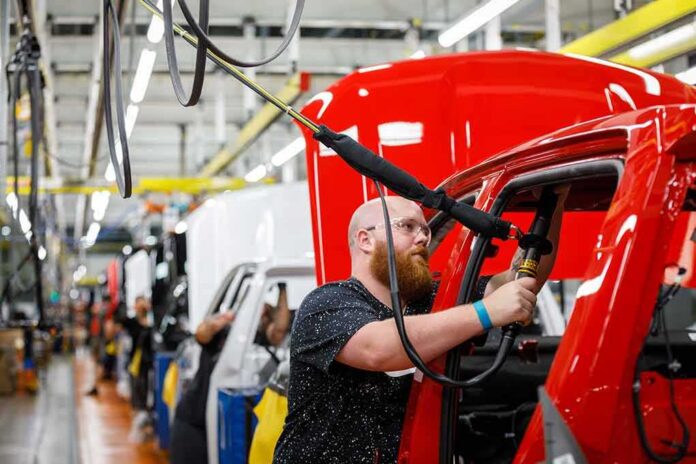
BMW’s job-cut plan looks severe on paper, yet the company is drawing a hard line around where the pain falls. Reporting says the cuts will target administration and research and development roles, while production workers are spared. That detail changes the story. This is not a broad strike at the assembly line. It is a restructuring of the white-collar side of a giant industrial company that wants to get leaner fast.
The scale still matters. Reuters said BMW expects its global workforce to shrink by around 8,000, with the cuts running through the end of 2027. Reuters also reported that the company expects the reductions to come mainly through natural attrition rather than layoffs. That is important because it shows BMW is trying to avoid the image of a blunt firing spree. It wants the same headcount result with less public conflict.
Voluntary Exit, Not Open Warfare
BMW’s preferred tool is voluntary redundancy. Reuters reported that the severance programme was agreed with the works council and aimed at administration and development divisions. Other reporting said BMW would offer voluntary severance to about 40,000 of its roughly 85,000 permanent German employees, starting in October 2026. In plain terms, BMW is inviting a large slice of its German office workforce to leave on negotiated terms.
That structure gives BMW cover, and it gives workers a choice. Both things are true. The company can say it respected labor processes. Workers can still feel real pressure when a giant employer signals that the future is being trimmed down around them. The numbers are large enough to create that feeling. About 8,000 jobs is not a symbolic cut. It is a serious reset of how BMW wants to run itself.
Why BMW Is Making the Move
The company’s logic is easy to see. Reuters said BMW is cutting staff in response to squeezed profits and weak demand. Bloomberg and Moneycontrol described the same move as a bid to become leaner and better compete with Chinese rivals. That is the business case in one sentence: lower costs, tighter operations, and more room to fight in a brutal global market. BMW is acting like a company that no longer trusts old margins to stay intact.
Germany’s car industry gives this plan extra weight. BMW is not moving alone. Reuters noted that the company is the latest German carmaker to announce cuts under pressure from profits and demand. That larger backdrop matters because it makes BMW’s plan look less like an isolated shock and more like part of an industry correction. For workers, that can feel like a tide. For executives, it looks like discipline. For everyone else, it looks like the bill coming due.
What Labor Will Watch Closely
The cleanest version of BMW’s plan is also the most fragile. It depends on enough people taking voluntary offers, enough retirements happening naturally, and enough jobs disappearing without open confrontation. If any of those pieces fail, the company could face harder choices later. The public record now shows the framework, the target, and the broad scope, but not every safeguard or fallback rule inside the deal. That leaves room for labor to ask hard questions.
🇩🇪 BMW just became the last major German carmaker to announce a restructuring program.
It's expected that by the end of 2027, 8,000 jobs might be eliminated worldwide. In Germany, BMW plans to offer voluntary severance to nearly half of its 85,000 German employees, about 40,000…— Data Explained (@dataexplain) July 29, 2026
Labor’s strongest argument is not that BMW has admitted coercion. It has not. The stronger argument is simpler and more practical: when a major employer signals deep cuts, workers can feel the pressure even when the paperwork says “voluntary.” BMW may avoid the spectacle of forced layoffs, but it still has to manage morale, trust, and fairness. In Germany’s auto sector, those are not soft issues. They are part of the business model.
Sources:
insiderpaper.com, reuters.com, handelsblatt.com, malaymail.com, n-tv.de, spiegel.de
© standardheadlines.com 2026. All rights reserved.