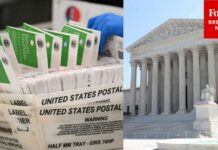

The Supreme Court just turned hundreds of thousands of once-legal Haitian and Syrian neighbors into potential “illegal immigrants” overnight, while Haiti is still under a U.S. “Do Not Travel” warning.
Story Snapshot
- Supreme Court cleared Trump’s administration to end Temporary Protected Status (TPS) for Haitians and Syrians, stripping deportation protection.[7]
- Haiti remains under a Level 4 “Do Not Travel” advisory for crime, terrorism, kidnapping, and unrest.[8]
- Roughly 350,000–500,000 Haitians face loss of legal status and work permits, hitting U.S. families and local economies hard.[5][7]
- The Court said judges cannot review most TPS decisions, giving the executive branch sweeping control over who stays and who goes.[7]
Supreme Court Opens the Door to Mass Deportations
The United States Supreme Court ruled that the Trump administration can end Temporary Protected Status for Haitian and Syrian immigrants, clearing the way for mass loss of deportation protections.[7] This ruling means people who were lawful, working, and paying taxes can suddenly see their status evaporate and be treated as “illegal” almost overnight.[7] The humanitarian program for Haitians alone covers roughly 350,000 to 500,000 people who have built lives and families here.[5][9] For many readers, these are coworkers, church members, and neighbors, not strangers.
Justice Samuel Alito’s majority opinion accepted the administration’s position that Syria is no longer a full war zone and that millions of Syrians are returning home.[1] The Court also deferred to the Secretary of Homeland Security’s broad discretion, saying the decision to end TPS was “rational” and that federal law bars judges from reviewing TPS decisions except on constitutional grounds.[7] This gives the executive branch very strong power to end protections even when human rights groups warn of serious danger.
Haiti Still Under “Do Not Travel” While Deportations Loom
While deportation protections are ending, the United States State Department still tells Americans flatly: “Do Not Travel to Haiti” due to crime, terrorism, kidnapping, unrest, and limited health care.[8] Haiti has been under a national state of emergency since March 2024, and the government warns there is a substantial risk of stray bullets, even for people not involved in any violence.[1][8] Advocates at a Miami protest say sending people back is like handing down “a death sentence” because of gang rule and chaos on the ground.[10]
A fact sheet on the Haiti TPS termination notes the administration itself admits conditions remain unsafe but claims keeping Haitians here is “contrary to the national interest.”[1] That breaks with how TPS has worked for decades, where dangerous country conditions justified protection, not removal.[1] For conservatives who care about clear laws and honest government, this upside-down logic is troubling: Washington warns its own citizens not to visit Haiti, yet may send long‑time legal residents straight into that same danger.
Families, Churches, and Local Economies in the Crosshairs
Ending TPS will strip work authorization from hundreds of thousands of people who have held jobs, paid taxes, and raised children in American communities.[5][7] These Haitians and Syrians are often deeply tied to local churches, small businesses, and care work, from nursing homes to construction sites.[1] Reuters reports that once status is revoked, their deportation protections “evaporate,” and many instantly become removable under immigration law.[7] That sudden shift can break up mixed‑status families, leaving American‑born kids without a parent or main breadwinner.
Judge Ana Reyes, in an earlier district court ruling blocking the Haiti termination, found the decision “arbitrary and capricious,” saying it failed to consider overwhelming evidence of present danger in Haiti.[6] Her order temporarily protected 350,000 Haitian TPS holders from losing status and being deported.[6] The Supreme Court’s new ruling wipes away that shield. For readers concerned about stability, work, and church life, this is not a distant legal fight; it is a direct hit on social fabric in cities and towns across the country.
Court Limits Oversight, Raises Questions About Power and Process
Under the 1990 law that created TPS, the Supreme Court now says judges cannot review most termination decisions by the Department of Homeland Security, unless there is a clear constitutional claim.[7] Legal analysts note that most past challenges have argued racial discrimination and violations of the Administrative Procedure Act, claiming terminations were “arbitrary and capricious” and ignored real country conditions.[20] By closing the door to non‑constitutional review, the Court has concentrated power in the executive branch and weakened outside checks on how TPS is used or cut.[7]
U.S. Supreme Court Rules in Favor of Trump Administration, Allowing End of TPS for Haitians and Syrians
June 26, 2026
In a landmark immigration decision, the U.S. Supreme Court ruled 6–3 in favor of the Trump administration, allowing the federal government to terminate… pic.twitter.com/u2Z8e122zd
— Luckson Etienne 🇭🇹🇺🇸 (@eluckson12) June 26, 2026
Civil rights lawyers point out that recent TPS rollbacks have almost all hit non‑European, majority non‑white countries, including Haiti, Venezuela, Somalia, and others.[19][20] Multiple lawsuits argue that decisions were driven by racial animus and national origin bias, not honest security reviews.[17][23] The Court’s majority disagrees, saying plaintiffs are unlikely to prove race was a motivating factor.[3] That split leaves many Americans torn: they want secure borders and limited government spending, but they also expect fair treatment and real evidence when Washington ends life‑changing protections.
Sources:
[1] YouTube – What ending deportation protection means for thousands
[3] Web – Supreme Court to weigh Trump’s bid to end deportation shield for Haiti …
[5] Web – Supreme Court lets Trump strip deportation protections from Syrians …
[6] YouTube – TPS for Haitians and Syrians Hangs in the Balance
[7] YouTube – What ending US deportation protection means for Haitians, Syrians
[8] Web – United States: Supreme Court Allows Termination of TPS for Haiti and …
[9] Web – Trump can begin deportations of Syrian, Haitian TPS holders, Supreme …
[10] Web – Court rulings put deportation protections for Haitians, Syrians …
[17] Web – Racial Animus Claims May Play a Key Role in the TPS Cases
[19] Web – 2025 NTPSA v. Noem I (Haiti and Venezuela)Lawsuit Information
[20] Web – Mullin v. Doe | Supreme Court Bulletin | LII / Legal Information …
[23] Web – Haitian-Americans United v. Trump (TPS Terminations) – District Court
© standardheadlines.com 2026. All rights reserved.