
Investigators have uncovered a massive covert operation near the United Nations, threatening to cripple New York’s cell network and putting America’s leaders—and our security—at risk during a crucial global summit.
Story Snapshot
- The Secret Service dismantled over 300 SIM servers and seized 100,000 SIM cards within 35 miles of the UN General Assembly.
- The operation posed an imminent threat to New York’s telecommunications, coinciding with the high-profile UN event.
- Authorities are investigating potential links to nation-state actors and advanced telecom attacks targeting U.S. infrastructure.
- Rapid action from federal and local agencies neutralized the risk, with forensic analysis ongoing to determine perpetrators and motives.
Scale and Timing of the Threat
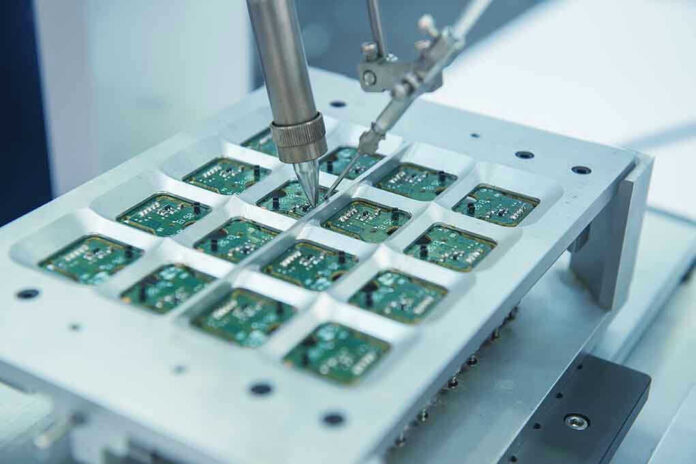
Federal investigators, led by the U.S. Secret Service, discovered a sophisticated network of telecommunications devices—including more than 300 SIM servers and approximately 100,000 SIM cards—strategically placed within 35 miles of the United Nations headquarters. The devices were capable of disabling cell towers, launching denial-of-service attacks, and enabling encrypted communications used by criminals and hostile foreign actors. This alarming find occurred in September 2025, just as world leaders converged on New York City for the UN General Assembly—a time when the threat to national security could not be higher.
The rapid deployment and sheer volume of this equipment signal a chilling escalation in the tactics used against America’s most vital infrastructure. By targeting the heart of New York’s telecommunications network, the perpetrators sought not only to disrupt communications among millions but also to endanger government officials, emergency services, and critical public safety operations. The timing—coinciding with the UN General Assembly—suggests a calculated attempt to exploit a moment of maximum vulnerability, underscoring why vigilant policing and strong borders matter more than ever.
Background: Evolving Threats to Infrastructure
Telecommunications infrastructure remains a top target for both organized crime and nation-state adversaries. SIM servers and cards are frequently exploited to facilitate anonymous communication, fraud, and widespread network disruption. Past incidents, including SIM swapping schemes and telecom fraud, have already exposed vulnerabilities in systems essential for first responders and government continuity. The Secret Service’s Advanced Threat Interdiction Unit was established precisely because such sophisticated attacks are on the rise, and the threat intensifies during high-profile gatherings like the UN General Assembly, where any disruption could have far-reaching national and international consequences.
The devices were found scattered throughout the tristate area—a region dense with critical infrastructure and international diplomatic activity. This discovery follows a disturbing pattern: as technology advances, so do the capabilities of those who wish to do America harm. Previous telecom attacks have targeted government networks and emergency services, prompting the need for heightened security and constant vigilance, especially when global leaders are present on American soil.
Coordinated Response and Ongoing Investigation
The Secret Service, with support from Homeland Security, the Department of Justice, the Office of the Director of National Intelligence, and local law enforcement, responded with unprecedented speed. Their immediate confiscation of the devices eliminated the most acute threat to New York’s communications during the UN event. Secret Service Director Sean Curran emphasized the severity of the situation and reaffirmed the agency’s commitment to defending critical infrastructure. Special Agent Matt McCool confirmed that forensic analysis is underway, focusing on identifying both the perpetrators and their ultimate objectives—whether criminal or state-sponsored.
This operation highlights the importance of cross-agency collaboration. Federal agencies led the response, with local police providing tactical support to secure locations and assist with evidence gathering. The ongoing investigation is expected to reveal whether the plot was orchestrated by criminal syndicates, foreign intelligence services, or a combination of both. As authorities analyze the confiscated equipment, Americans are reminded that our security agencies must remain empowered and unencumbered by bureaucratic obstacles or misguided restrictions that slow response times or limit investigative reach.
Consequences and Lessons for America’s Security
The immediate neutralization of this threat ensured the safety of senior government officials, emergency personnel, and the broader public during one of the year’s most sensitive international events. Had the devices succeeded in their mission, the consequences could have been catastrophic: business disruptions, blocked emergency communications, and public panic. In the long term, this incident will likely prompt new regulations for telecommunications security and encourage the adoption of advanced technologies for threat detection.
Secret Service foils massive plot to cripple NYC cell network and threaten UN General Assembly https://t.co/Hm1mmOMuqN
— Grizzly Joe 🇺🇸🇮🇱 👊 (@GrizzlyJoeShow) September 23, 2025
Security experts have already warned that attacks of this scale reflect a growing convergence between criminal networks and hostile foreign actors using advanced technology. Some caution that while the sophistication suggests possible nation-state involvement, definitive attribution awaits further forensic evidence. What is clear is that American vigilance, empowered law enforcement, and strong executive action are essential to defend our infrastructure and constitutional freedoms against those who would exploit technological vulnerabilities to undermine our nation’s safety and sovereignty.
Sources:
Secret Service Dismantles Major Plot to Disrupt New York Cell Network Near UN Assembly
US Secret Service Dismantles Imminent Telecommunications Threat in New York