
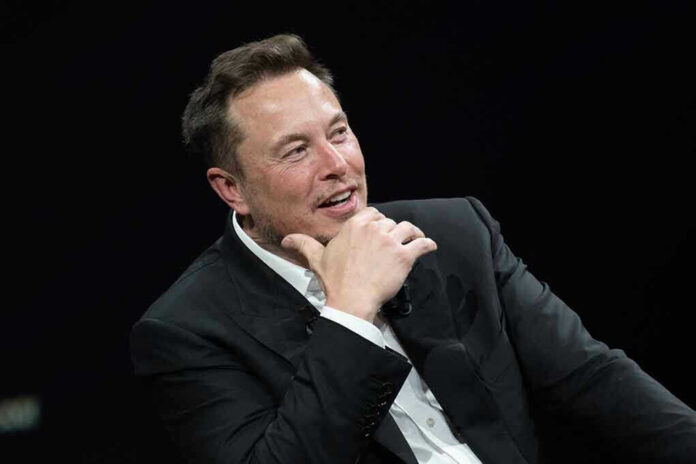
standardheadlines.com — A federal jury just tossed Elon Musk’s challenge to OpenAI on a timing technicality, leaving the most troubling questions about Big Tech’s control over artificial intelligence wide open.
Story Snapshot
- A California jury unanimously rejected Musk’s lawsuit against OpenAI and Sam Altman on statute-of-limitations grounds, without ruling on whether OpenAI betrayed its founding mission.
- Musk, an early co-founder and major funder, argued OpenAI abandoned its nonprofit, “benefit humanity” purpose when it converted to a profit-driven structure.
- OpenAI is now valued in the hundreds of billions as artificial intelligence becomes a strategic battlefield for governments, corporations, and culture.
- The outcome highlights how powerful institutions can win on legal procedure while Americans are left with no answers about who controls this technology and to what end.
What The Jury Actually Decided — And What It Did Not
A federal jury in Oakland, California, ruled unanimously that Elon Musk’s claims against OpenAI and its chief executive Sam Altman were filed too late, so the case could not move forward on the merits.[1][2] Jurors deliberated for less than two hours after roughly eleven days of testimony and arguments, concluding that Musk’s allegations were barred by the statute of limitations.[1][2] Reporting says emails and texts showed Musk knew about the disputed issues by 2021, three years before suing.
This means the jury never decided whether OpenAI actually betrayed its founding promise to develop artificial intelligence for the benefit of humanity rather than for private profit.[1][2] Commentators from across the corporate media immediately framed the outcome as Musk “losing” or being “rebuked,” even though the decision turned on timing instead of mission.[2] Musk has said he will appeal, arguing that the judge and jury only ruled on a “calendar technicality,” not on whether OpenAI kept faith with its original commitments.[2]
Musk’s Claims About OpenAI’s Mission Shift
Musk helped co-found OpenAI in 2015 and served as an early funder, with media reports describing him as contributing tens of millions of dollars to launch the laboratory as a nonprofit focused on safe artificial intelligence.[3][4] His lawsuit argued that Altman and other leaders later abandoned that nonprofit mission by creating a for-profit structure designed to attract massive outside investment, notably from Microsoft, and then steering the organization toward commercialization.[1][3][4] Musk’s side described this shift as “stealing a charity” by converting a donor-backed nonprofit into a profit machine.[2][3]
Court coverage says Musk did not just make symbolic complaints but sought sweeping remedies.[1][3][4] He asked the court to unwind OpenAI’s for-profit arm, remove Altman and president Greg Brockman from leadership, and order up to one hundred fifty billion dollars in damages to be returned to the nonprofit entity.[1][3][4] Former employees also fueled skepticism about OpenAI’s leadership, filing a brief accusing Altman of low integrity and of pushing lifetime non-disparagement agreements on departing staff.[4] Those credibility questions became part of the broader battle over whether the company’s current direction can be trusted.
OpenAI’s Counter-Narrative And The Procedural Win
OpenAI and Altman responded by insisting there was never a promise to remain a nonprofit forever and that a for-profit structure was necessary to secure the enormous resources required to compete in advanced artificial intelligence.[1][3][4] They pointed to Musk’s own conduct, saying he once pushed for a merger between OpenAI and Tesla or for a for-profit entity that he would lead, which they argued undermined his claim that commercialization itself violated the founding mission.[1] Their lawyers characterized his lawsuit as an “after-the-fact contrivance” and suggested it sought to boost his rival artificial intelligence company, xAI.[1][3]
The jury’s swift, unanimous verdict shows that the statute-of-limitations defense was persuasive, at least regarding when Musk knew enough to sue.[1][2] CBS and other outlets report that emails and texts convinced jurors Musk was on notice by 2021 about the shift toward a for-profit model and the Microsoft partnership. Because the case turned on timing, the verdict functions as a clean legal victory for OpenAI while leaving the substantive dispute—whether donors and the public were misled about the durability of the nonprofit mission—unresolved in any court order.[1][2]
Why This Matters For Conservatives Watching The AI Landgrab
This fight is not just a billionaire grudge match; it reveals how quickly unelected tech elites can pivot from lofty “benefit humanity” language to profit-driven control over civilization-shaping tools. OpenAI has grown into a company valued in the realm of eight hundred billion dollars, riding a global artificial intelligence boom that affects everything from jobs and small businesses to political speech and national security.[1][3] Yet the public still does not have clear answers about who ultimately sets its priorities or what legal obligations, if any, bind its leadership.
The real question of Elon Musk’s lawsuit against OpenAI was whether the company’s transformation from a safety-minded nonprofit into a ravenous corporate behemoth was cynical in intention or merely in outcome. While Musk may have lost the case, the trial was also a net negative… pic.twitter.com/omrAKxvlj9
— The New Yorker (@NewYorker) May 21, 2026
For readers who care about constitutional freedoms, this case highlights a deeper concern: once a small circle of corporate and nonprofit insiders dominates artificial intelligence, they can quietly encode political and cultural bias into the systems that filter information, shape news, and influence elections. The Musk-OpenAI verdict shows how powerful institutions can win on procedure while the real questions—about mission, accountability, and the integrity of our information ecosystem—never reach a courtroom. Conservatives should demand transparency about artificial intelligence governance before these tools are fully weaponized against free speech, religious liberty, and traditional values.
Sources:
[1] Web – Federal jury delivers verdict on Musk’s lawsuit against OpenAI
[2] YouTube – Elon Musk loses lawsuit against OpenAI and Sam Altman | ABC NEWS
[3] YouTube – The Silicon Valley Verdict Musk vs OpenAI
© standardheadlines.com 2026. All rights reserved.