
Federal agents say they quietly pulled an alleged Iraqi terror commander out of Turkey, flew him to New York, and stopped a plan to hit Jewish targets in three American cities at once.
Story Snapshot
- Prosecutors accuse Mohammad Baqer Saad Dawood Al‑Saadi of helping direct nearly 20 attacks tied to an Iran-backed network in Europe and North America.[1]
- He allegedly tried to hire what he thought was a hit man to bomb or burn Jewish institutions in New York, Los Angeles, and Scottsdale, Arizona, using cryptocurrency as payment.[2]
- Federal officials say he worked with Iran’s Islamic Revolutionary Guard Corps (IRGC) and posed with slain commander Qassem Soleimani.[1]
- The case exposes both how far Iran’s proxies may reach and how much Americans still do not see about the front end of counterterror investigations.[1]
Alleged mastermind moved from battlefield commander to global plotter
The United States Department of Justice describes Mohammad Baqer Saad Dawood Al‑Saadi as a senior commander for Kata’ib Hizballah, a United States‑designated foreign terrorist organization that operates in Iraq and aligns with Iran’s Islamic Revolutionary Guard Corps.[1] Prosecutors say he helped oversee Harakat Ashab al‑Yamin al‑Islamiya, a front group used to claim at least 18 attacks across Europe since March 2026, plus two in Canada, all aimed at American and Israeli interests.[1] Every detail signals long-term, structured involvement, not a lone‑wolf fantasy.
Justice Department officials allege Al‑Saadi worked closely with Qassem Soleimani, the longtime commander of the Islamic Revolutionary Guard Corps’ Quds Force, before Soleimani died in a United States airstrike in 2020.[1] Photos filed in court reportedly show Al‑Saadi standing with Soleimani, which prosecutors use to reinforce the claim that this was not a fringe militant but a trusted insider for Iran’s proxy machine.[2] For Americans who assumed the Soleimani strike closed that chapter, this case suggests the network adapted rather than disappeared.
From European bombings to an alleged American synagogue contract
Authorities say Al‑Saadi did not just cheer on violence from afar; they accuse him of helping plan, coordinate, and then publicly claim those European operations through propaganda videos and social media posts under Harakat Ashab al‑Yamin al‑Islamiya’s name.[1] Officials connect him to a March 9 online call to “warriors of Islam” to wage violent jihad, followed by a wave of attacks on Western and Israeli targets.[1] The narrative paints a commander who blends digital messaging, remote direction, and old‑fashioned explosives.
Prosecutors say that by spring 2026, Al‑Saadi’s focus shifted to American soil.[1][2] Court filings and broadcast reports describe an alleged plan to strike a prominent synagogue in New York City, along with major Jewish centers in Los Angeles and Scottsdale, Arizona, as close to simultaneously as possible.[2] Law enforcement says he offered an undercover officer ten thousand dollars in cryptocurrency to carry out bombings or arson at those sites, sending a three‑thousand‑dollar down payment and mapping out options via photos and diagrams.[2]
Sting operation, extradition, and the unseen work between headlines
Federal investigators say an undercover officer, posing as a willing attacker, spoke directly with Al‑Saadi about how to hit the synagogue, how much the operation would cost, and how to time multiple attacks.[1][2] Reports say he asked whether all three Jewish locations could be set on fire at the same moment and pressed for an April 6 strike date.[2] Those conversations, if accurately recorded and authenticated, go straight to the hardest legal question in these cases: intent versus mere hateful talk.
The U.S. Justice Department has officially announced the arrest and federal indictment of Mohammad Baqer Saad Dawood Al-Saadi, a high-ranking operative for the Iraqi militia Kata'ib Hezbollah (the Hezbollah Brigades) and Iran's Islamic Revolutionary Guard Corps (IRGC).
The…
— WORLDINTEL24🛜 (@WORLDINTEL24) May 16, 2026
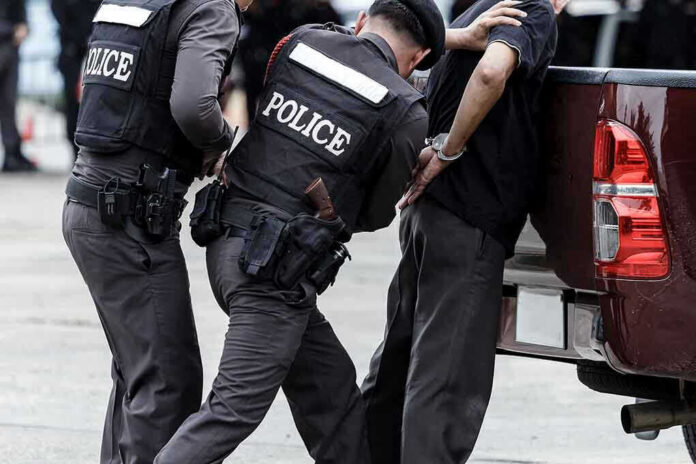
Officials say Turkish authorities arrested Al‑Saadi, transferred him into American custody, and put him on a plane to Manhattan, where he now faces six terrorism‑related counts in federal court.[1][2] Defense counsel already casts him as a political prisoner tied to Soleimani’s legacy rather than a criminal plotter, arguing he should be treated as a prisoner of war.[2] That claim will resonate with some abroad, but it clashes with a fundamental American conservative instinct: civilians who target synagogues and civilians for slaughter are terrorists, not soldiers.
What this case reveals about modern terror and American resolve
Most Americans will never see the intelligence leads, crypto‑tracking, and international deals that likely led to this arrest.[1] They see only the end result: a man in a Manhattan courtroom, smiling as prosecutors describe plans to kill Jews in three time zones.[2] Common sense says you judge a network partly by its chosen targets; when a group repeatedly selects synagogues and Jewish centers, it tells you exactly what moral universe it lives in, and why it cannot be wished away by diplomacy.
At the same time, the public record still has holes. Reporters do not yet have the full complaint, the verbatim undercover transcripts, or independent verification of every claimed European attack. Some charges may narrow or evolve as evidence gets tested. That uncertainty is not a bug of the American system; it is a feature. The same rule of law that insists on due process also insists the government hunt down those who plot mass murder and bring them into open court. This case sits squarely at that intersection.
Sources:
[1] Web – Basra Police Arrest Suspected Terrorist Commander – DVIDS
[2] Web – Iraq dismantles terrorist cell, arrests ISIS commander – Anadolu …