
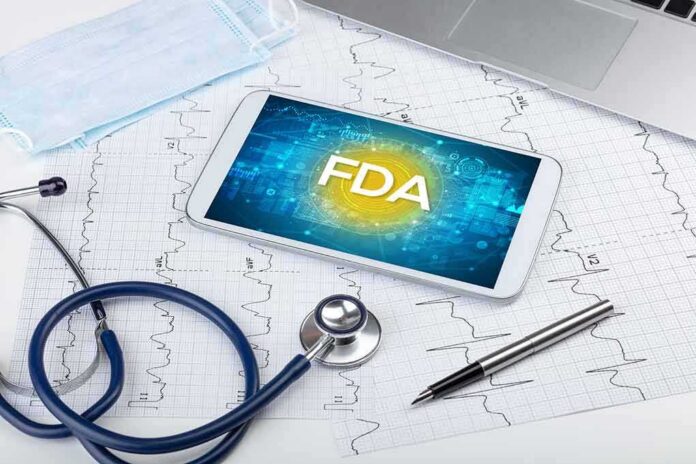
The nation’s top drug regulator just put every GLP-1 drug in America on notice for a rare kind of sudden vision loss.
Story Snapshot
- The Food and Drug Administration (FDA) ordered a class-wide warning about a rare eye condition called NAION.
- The warning will appear in the Warnings and Precautions section, not as a boxed warning.
- Meta-analysis across 126 trials found more likely NAION events with GLP-1 drugs than with placebo or other drugs.
- European drug regulators also called NAION a very rare effect for semaglutide.
What The FDA Decided And Why It Matters
The Food and Drug Administration ordered all glucagon-like peptide-1 receptor agonist makers to add a warning about a potential increased risk of non-arteritic anterior ischemic optic neuropathy. This is a rare event where blood flow to the optic nerve drops. Vision in one eye can fade or go dark, often without pain. The Food and Drug Administration said the signal is strong enough for a class-wide risk disclosure across weight loss and diabetes brands, including semaglutide and tirzepatide products.
The agency placed the information in Warnings and Precautions, not in a boxed warning. That choice signals concern without declaring a confirmed, high-frequency danger. The Food and Drug Administration pointed to evidence from randomized trials and post-market reports. The agency’s job is to surface low-probability risks early so doctors and patients can act fast if symptoms appear. That approach aligns with common sense: tell people what to watch for, then let them decide with their doctor.
What The Data Actually Show
A Food and Drug Administration analysis pooled 126 randomized trials with more than 134,000 patients. Reviewers identified 15 probable NAION cases: 10 in patients on GLP-1 drugs, 5 on placebo, and none in patients on other glucose-lowering drugs. That translated to about 6.4 cases per 100,000 person-years with GLP-1 drugs versus 3.8 with comparators. The numbers are small, but the direction of effect is consistent across the class signal the agency described.
Eye specialists have reached similar, careful conclusions. The American Academy of Ophthalmology summarized that semaglutide may be linked to a small increase in relative risk, while the absolute risk remains low in the general population. Non-arteritic anterior ischemic optic neuropathy itself is uncommon. Most people will never face it, even on these drugs, but a small uptick matters when tens of millions might use them.
What Europe And Others Are Doing
European Union safety reviewers also weighed in. The Pharmacovigilance Risk Assessment Committee concluded that non-arteritic anterior ischemic optic neuropathy is a very rare side effect of semaglutide, with a frequency up to 1 in 10,000 patients. That mirrors the United States signal posture and adds weight to a cross-Atlantic view: warn users, watch closely, and keep studying the mechanism and risk levels across different drugs and patient groups.
1. The condition is NAION: blood flow to the optic nerve drops, and vision in one eye can go suddenly, usually without pain.
Across 126 trials, the FDA counted 6.4 cases per 100,000 person-years on GLP-1s vs 3.8 on comparators. 2/5
— telos rx (@telos_rx) November 10, 2026
Drug industry coverage underscores the scope of the Food and Drug Administration’s action. The order applies to all approved GLP-1 medicines. Labels will now alert prescribers and patients to sudden vision changes and the need for urgent care if they occur. This is not a ban, a recall, or a blockade on access. It is a belt-and-suspenders step to help busy clinicians and patients catch a fast-moving eye event before damage locks in.
What To Do If You Take A GLP-1 Drug
Patients should not stop medicine on their own. Call your doctor right away if vision in one eye goes blurry, dim, or dark. Act the same day if possible. Doctors should review eye history, sleep apnea, and vascular risk, then weigh drug benefits against the small but real risk signal. American conservative values favor informed choice. Clear labels respect that. People deserve the facts, fast care when needed, and freedom to decide with their doctor.
How To Read This Warning The Right Way
Regulators flag safety signals when rare harms may rise above background levels. A warning does not claim proven causation for all users. It tells the truth that matters most: a rare event could happen, and speed saves sight. The Food and Drug Administration used the best available trial data to date and post-market reports to act. That is prudent stewardship. Keep the benefits in view, stay alert for symptoms, and make choices with eyes wide open.
Sources:
youtube.com, fda.gov, drugs.com, uz.kursiv.media, pmc.ncbi.nlm.nih.gov, aao.org
© standardheadlines.com 2026. All rights reserved.