

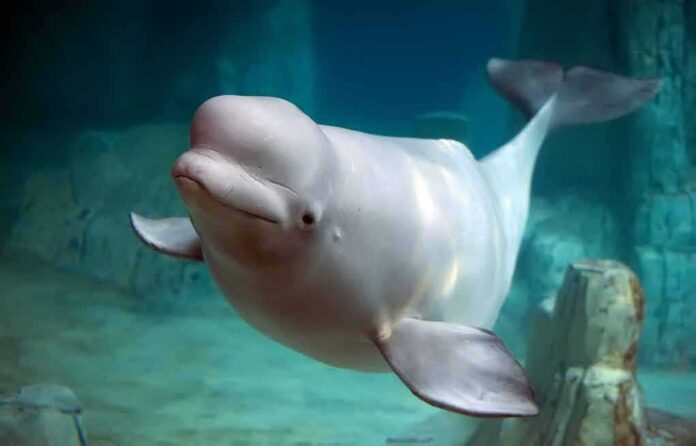
A third beluga whale moved from Canada to Chicago’s Shedd Aquarium died after a sudden health crash, and the clock now matters for every whale left.
At a Glance
- Osiris, a 26-year-old female beluga from Marineland in Canada, died Monday after a rapid decline.
- Shedd staff saw sudden behavior and breathing changes, moved her to a medical pool, and tried lifesaving care.
- She was among a group relocated in late summer; a necropsy is underway to determine cause.
- This marks the third Marineland beluga to die at Shedd in recent weeks, heightening public concern.
What Happened Inside Shedd On Monday Morning
Shedd Aquarium said Osiris showed sudden changes in behavior and in how she breathed on Monday morning. The animal care team moved her to the medical habitat so they could act at once. She died soon after, despite lifesaving efforts by veterinarians and staff. Shedd described Osiris as a 26-year-old female who arrived in late July as part of the transfer from Marineland of Canada, the shuttered park in Niagara Falls, Ontario. A full necropsy is in progress, with test results pending.
Multiple outlets confirmed the same core facts: the timing, her age, the rapid decline, and her link to the Canadian transfers. Reports also say Shedd had flagged Osiris as a whale under medical watch since arrival, citing ongoing health challenges that needed treatment. That context matters. It shows why teams kept round-the-clock oversight on the transferred whales and why a rapid response protocol was in place when her symptoms appeared.
Why These Transfers Were Urgent And Hard
Marineland closed and was seeking homes for its beluga whales. Accredited aquariums stepped in to receive them, including Shedd. Reporting describes many of these belugas as animals of clinical concern, not a random, robust herd. That means higher baseline risk during a stressful move and early adjustment period. Transport, new water chemistry, social reshuffling, and diet changes can tax a beluga already under care. That mix can turn a minor wobble into a medical spiral if the animal is fragile.
Osiris was the third Marineland beluga to die at Shedd in recent weeks. Another Marineland beluga also died after a transfer to Spain, which widens the lens beyond a single facility. The pattern suggests a selection issue: animals who most needed relocation may also have carried the greatest risk during and after the move. That does not end the duty of care. It raises the bar for faster diagnostics, stronger isolation options, and faster access to specialized treatments when breathing or behavior changes appear.
What The Public Should Watch For Next
The necropsy will matter. Pathologists will look for respiratory infection, organ failure, gastric illness, toxin exposure, or trauma. They will examine lungs for pneumonia, check heart and liver for underlying disease, and run panels for pathogens. They will review transport and treatment records to see if a shared thread runs through recent losses. If a fixable factor emerges, such as a pathogen or husbandry shift, Shedd and partner institutions can act on it at once.
The remaining whales are under tight watch, and teams are adjusting care plans as needed. Readers should look for three signals: first, whether necropsy findings point to a concrete cause that can be treated or prevented; second, whether the same cause appears in earlier cases; third, whether Shedd reports operational changes tied to those findings. Clear cause-and-effect paired with visible changes earns trust far more than general reassurances ever can.
Balancing Rescue, Risk, And Responsibility
Rescue is a promise, not a guarantee. Moving sick or compromised animals can still be the most humane choice when the source facility cannot meet their needs. But rescue also demands transparency and speed. When deaths occur in sequence, the public deserves facts and a plan. That is common sense and lines up with conservative values of accountability, measurable results, and stewardship of resources, public and private. Institutions earn support by showing their work and owning the outcomes.
4th Beluga Whale Dies at Chicago's Shedd Aquarium https://t.co/7Tjp1t6gII
— Michael W Evans (@evans3_w) September 23, 2026
Shedd has provided the who, what, and when, and it has started the postmortem process. The next step is the why and the now what. If pathology shows a cause within human control, deploy the fix and publish the change. If the cause reflects baseline illness from Marineland’s cohort, say so plainly and outline how care protocols now reflect that higher risk. Either way, the mission holds: protect the whales in hand, and share enough detail so the public can see the path forward.
Sources:
washingtontimes.com, abcnews.com, abc7chicago.com, fox32chicago.com, chicago.suntimes.com, marineconnection.org, cbc.ca
© standardheadlines.com 2026. All rights reserved.