

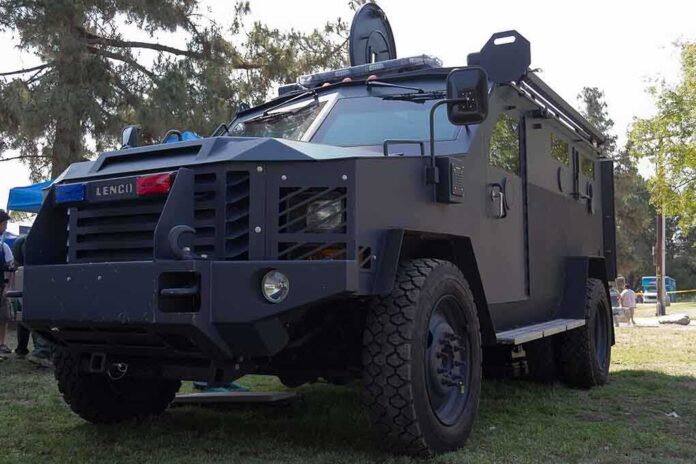
The Army is quietly trading armor for algorithms, betting your sons’ lives on lighter trucks, drones, and “transformation” plans drawn up in the Pentagon instead of on the battlefield.
Story Snapshot
- The Army is converting all Infantry Brigade Combat Teams into lean Mobile Brigade Combat Teams built around light trucks and drones.
- Washington’s 81st Stryker Brigade is the flagship test unit, shedding armored Strykers for unarmored Infantry Squad Vehicles.
- Personnel in these units will drop from about 4,200 to roughly 2,500–2,700 soldiers.
- Supporters say the shift boosts mobility and lethality; critics warn it may hollow out combat power and readiness.
Army Transformation: From Heavy Armor to Lean Mobile Brigades
The Army’s new Mobile Brigade Combat Team concept marks a sweeping change in how American ground power is organized and fought. Under the Army Transformation Initiative and the “Transforming in Contact” doctrine, every Infantry Brigade Combat Team will be converted into a smaller, lighter, more dispersed Mobile Brigade Combat Team. Instead of thousands of troops moving in heavily protected vehicles, leaders envision lean formations moving quickly in light trucks, guided and protected by a thick web of drones and digital networks.
This transformation starts with the Washington Army National Guard’s 81st Stryker Brigade, based at Joint Base Lewis‑McChord, which is now the first Stryker formation being rebuilt as a Mobile Brigade Combat Team. The 81st previously gave up tanks to become a Stryker brigade in 2015 and is now turning in those eight‑wheeled armored vehicles for lightweight Infantry Squad Vehicles. Army planners describe the 81st as a pilot unit that will test doctrine, technology integration, and organization for all future Mobile Brigades.
What Changes on the Ground: From Strykers to Infantry Squad Vehicles
The most visible change is the swap from Stryker 8×8 armored vehicles to the GM Defense–Polaris Infantry Squad Vehicle, a fast, minimally protected truck based on a commercial pickup platform. Strykers offered a blend of mobility and armor; the new design deliberately trades that protection for speed, air transportability, and a lower visual and electronic signature. Supporters argue that when every battlefield is saturated with sensors and precision weapons, survival depends less on armor thickness and more on not being easily detected.
Mobile Brigades also shrink dramatically in size compared with legacy infantry formations. A traditional Infantry Brigade Combat Team fields roughly 4,200 soldiers including support, whereas the new Mobile Brigade Combat Team is planned at about 2,500 to 2,700 troops. Army and National Guard leaders frame this as a leaner, more efficient design that concentrates combat power in smaller, more agile elements. For readers who remember post‑9/11 troop cuts sold as “efficiencies,” this reduction will feel uncomfortably familiar, raising questions about whether the transformation masks another drawdown in real combat capacity.
Drones, Digital Networks, and the New Way of War
Alongside lighter vehicles and fewer soldiers, the Mobile Brigade model relies heavily on small drones, loitering munitions, and new reconnaissance and strike companies woven into the brigade structure. In recent training rotations, Army commanders reported that the overwhelming majority of artillery fire missions were spotted through drones, while units fired fewer rounds overall yet achieved far greater simulated lethality. Those results helped sell the idea that unmanned systems at squad and platoon level can offset the loss of armor and mass, if networks hold and electronic warfare does not sever the digital lifeline.
To support this new way of fighting, Mobile Brigades receive specialized elements such as multifunction reconnaissance companies and multipurpose companies designed to push sensing and fires down to the lowest echelons. The Army links these changes directly to lessons drawn from high‑tech conflicts, where large, slow, easily detected formations suffer punishing losses. For conservatives concerned about national defense, the key question is whether this shift truly strengthens deterrence or whether it gambles on technology and theory while trimming the visible muscle of the force.
National Guard Restructuring and the Stakes for Readiness
The Army National Guard sits at the center of this transformation, with plans to reshape its close‑combat forces into a mix of just two Armored Brigade Combat Teams and twenty‑five Mobile Brigade Combat Teams. That means most Guard combat formations will resemble the new lean, light model rather than the heavy brigades many Americans associate with deterrence in Europe or a major war in the Pacific. The Virginia National Guard’s 116th Infantry Brigade has already completed its conversion, joining the 81st as an early adopter and pathfinder for the rest of the force.
U.S. Army unveils lean Mobile Brigade Combat Team built for modern warfare pic.twitter.com/vHMVCQo0gX
— Army Recognition (@ArmyRecognition) December 10, 2025
Army leaders argue that Mobile Brigades are tailored for the real‑world theaters where American forces may deploy next: Eastern Europe, the Arctic, and the Indo‑Pacific. In those environments, rapid air deployment, dispersion, and the ability to move under constant surveillance matter more than sheer tonnage of armor. Yet watchdogs and skeptics warn that becoming “leaner” can undercut readiness if not paired with robust training, logistics, and clear limits on how many crises these smaller units are expected to cover at once.
Technology, Industry, and Conservative Concerns
Industry partners such as GM Defense and Polaris stand to benefit from long‑term contracts for Infantry Squad Vehicles and the sensors, networks, and unmanned systems that make Mobile Brigades possible. Army officials present this cooperation as necessary modernization, but fiscal conservatives will remember how past transformation programs ballooned in cost while delivering mixed battlefield results. With Washington still wrestling with debt and competing priorities, the Mobile Brigade program will test whether defense modernization can stay focused on warfighting value rather than corporate wish lists and bureaucratic fashion.
Underlying this entire shift is a tension familiar to many conservative readers: balancing innovation with proven strength. On one hand, ignoring lessons from modern drone‑saturated wars would be irresponsible. On the other, sidelining armor, cutting personnel, and trusting that software and sensors will compensate carries real risk if technology fails, networks are jammed, or conflicts last longer than planners expect. As Trump’s White House presses for a tougher, America‑first defense posture, scrutiny from Congress, veterans, and taxpayers will be essential to ensure that “lean and mobile” does not become a slogan that masks a thinner, more fragile Army.
Sources:
U.S. Army Transforms Washington-Based 81st Stryker Brigade Into New Mobile Combat Team
Infantry brigades shift to mobile brigades in Army transformation
Battle Rhythm: Guard Transforms Alongside Active Force
Letter to the Force: Army Transformation Initiative
Washington Army National Guard Selected for New Mobile Brigade
U.S. Army: Mobile Brigade Combat Teams
116th IBCT officially converted to Mobile Brigade Combat Team