

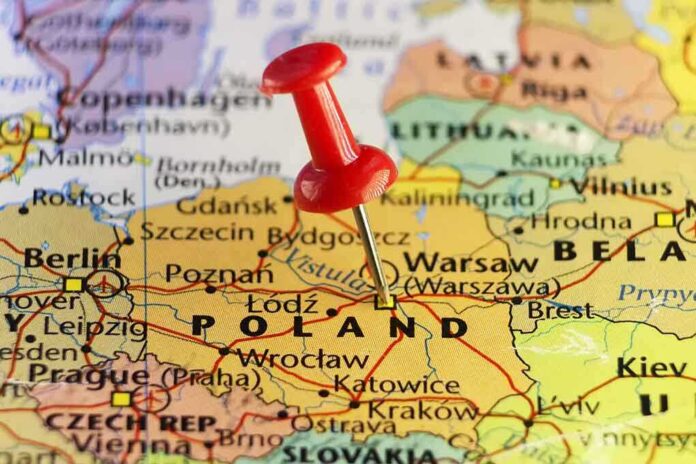
Residents of Eastern Poland are gripped by fear as Russian drones breach their airspace, raising serious concerns about regional security.
Story Snapshot
- Russian drones violated Polish airspace, escalating fears of conflict.
- Eastern Poland’s proximity to Belarus and Ukraine heightens anxiety.
- NATO’s response includes increased military presence and readiness.
- Local residents express fear and uncertainty about their future.
Heightened Tensions and Airspace Violations
In September 2025, Russian drones breached the airspace of NATO members Poland and Romania, causing significant alarm. This unprecedented incursion prompted NATO to scramble fighter jets and temporarily close Lublin Airport in Poland. The incident underscores the fears of many residents in eastern Poland who feel that the war in Ukraine could spill over into their territory, especially given the region’s close proximity to Belarus, a staunch Russian ally.
The Zapad-2025 military exercises, conducted by Russia and Belarus, have further added to regional tensions. Despite claims from Belarusian officials that these exercises are purely defensive, Western nations remain skeptical. The drills involve large-scale maneuvers near the Polish border, which have historically been a flashpoint for conflict. Such activities continue to fuel local fears of a potential escalation into direct conflict involving NATO forces.
Public Concerns and Military Readiness
The Polish government and NATO have responded to these developments by increasing military presence and readiness along the eastern flank. Additional jets and military hardware have been deployed from France, Germany, Czechia, and Denmark to reinforce Poland’s defenses. Despite these measures, residents in the region remain anxious, with some considering relocation to safer areas. The Polish and Romanian authorities have condemned the drone incursions as reckless, demanding new sanctions and NATO measures against Russia.
Local communities are caught in a difficult situation, balancing trust in NATO’s defense capabilities with fears that their region could become a battlefield. This anxiety is compounded by historical vulnerabilities and the socioeconomic challenges faced by these border areas, which are less developed than other parts of Poland.
Long-term Implications and Strategic Responses
The current situation in eastern Poland highlights the broader geopolitical tensions between NATO and Russia. While a large-scale invasion remains unlikely, the psychological impact on local communities is significant. The ongoing military activities and diplomatic responses are likely to result in sustained NATO reinforcement in the region, with increased defense spending and strategic focus on deterring further aggression.
In the long term, these developments could lead to demographic shifts as residents seek more secure living conditions. Economically, border regions may face reduced investment and tourism, while politically, there is likely to be strong support for robust defense policies. However, there is also the potential for public dissatisfaction if security concerns are not adequately addressed by national and international leaders.
Sources:
Residents on Poland’s Eastern Edges Fear for Their Future