

After years of open-borders chaos, the federal government just put $70 million behind a hard reset—buying a massive Arizona warehouse to process up to 1,500 immigration detainees.
Quick Take
- DHS purchased a 400,000+ square-foot warehouse in Surprise, Arizona for about $70 million, with plans to convert it into a 1,500-bed ICE processing facility.
- Local officials say the City of Surprise was not notified, highlighting how federal enforcement moves can land in communities with little warning.
- Supporters see the purchase as infrastructure for stepped-up interior enforcement; critics argue it risks abuse and poor conditions based on prior detention controversies.
- Officials have not announced a retrofit timeline, and ICE has offered limited public detail beyond confirming the intent to expand capacity.
What ICE Bought in Surprise—and What It’s For
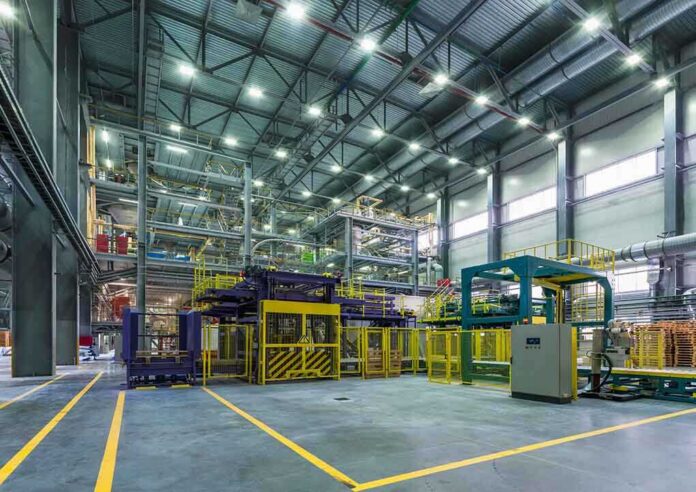
DHS, through ICE, acquired a warehouse in Surprise in the West Valley of metro Phoenix on January 23, 2026, according to county records cited by Arizona media. Reports describe the building as more than 400,000 square feet—roughly the footprint of multiple football fields—and previously used for logistics and shipping. ICE plans to convert the site into a 1,500-bed processing facility, signaling a major increase in detention and removal capacity in Arizona.
The basic facts are unusually consistent across coverage: the purchase price at roughly $70 million, the seller identified as the Rockefeller Group, and the facility’s location described near major roads in Surprise. What remains unclear is the operational timeline—when retrofitting begins, which contractors will be used, how staffing will scale, and what the processing flow looks like once buses start arriving. Those unknowns matter because capacity only becomes policy when it is activated.
Local Leaders Say They Were Left Out of the Loop
City leaders in Surprise have said the federal government did not contact them about the acquisition or detention plans before the news broke. That may be legal—immigration enforcement is federal—but it raises real-world questions for residents: traffic patterns, emergency response coordination, and how quickly a quiet commercial zone can become a hub for round-the-clock federal activity. Even Americans who favor stronger enforcement often expect transparency when Washington drops a major facility into a community.
Democratic Rep. Greg Stanton of Arizona publicly warned that the purchase could signal “disruptive activities” in communities, tying his concerns to broader enforcement actions that have drawn controversy elsewhere. The point of conflict is not just “detention versus no detention,” but how enforcement is executed—whether people are processed efficiently with due process protections and whether local communities get basic notice. The reporting does not show any formal agreement or communication plan between ICE and the city.
Why This Facility Fits the National Enforcement Push
Coverage connects the Surprise purchase to a wider federal push to expand detention space, including the broader trend of converting warehouses into processing or detention facilities. Reports cite a recent federal spending bill as a funding tailwind for expansion, and earlier reporting described ICE scouting sites in states such as Arizona. Taken together, the picture is straightforward: if the administration prioritizes removals, it needs beds, transportation staging, and processing capacity close to key corridors.
Arizona is also not a neutral location in the immigration debate. Border-state logistics make it an obvious staging point, but existing detention infrastructure in the state has also generated criticism. One report cited deaths in ICE custody at Arizona facilities increasing year-over-year, and it described allegations of denied medical care and neglect. Those claims, where supported by federal data cited in reporting, are part of why this new facility is already politically charged before a single wall is rebuilt or a single detainee is housed there.
Due Process, Court Challenges, and the Limits of “Just Trust Us”
ICE’s expansion plans land in a climate where enforcement tactics are being scrutinized in court. Reporting referenced legal conflict in Minnesota involving allegations that ICE violated more than 100 court orders within a month, and that an ICE official was ordered to appear in court. Separate concerns raised in coverage include the risk of improper detention of U.S. citizens or individuals with protected status such as DACA recipients. Those issues turn a capacity buildout into a constitutional question.
DHS has stated detainees receive proper care and access to legal and medical services, while critics use extreme rhetoric to argue the facility could become abusive. Based on the available reporting, the strongest, most verifiable concern is not a slogan—it’s oversight. If ICE is scaling quickly, Congress, courts, and watchdogs will test whether processing remains lawful, humane, and accurate. For conservatives, the goal should be enforce-the-law without sacrificing due process or inviting bureaucratic overreach.
Sources:
ICE is planning a 1,500-bed processing facility in a Surprise warehouse it just bought for $70M.
Rep. Greg Stanton says he’s concerned about the large warehouse ICE bought in Surprise