

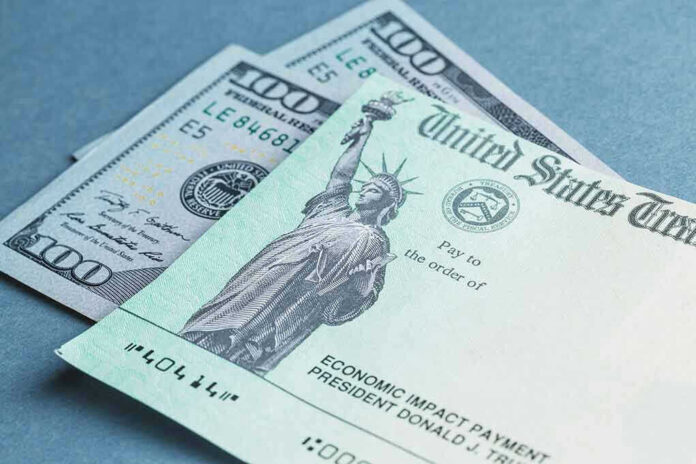
President Trump’s promise of a new $2,000 stimulus, funded by tariffs, remains an enticing yet elusive prospect for Americans.
Story Overview
- Trump proposes $2,000 payments to most Americans, funded by tariff revenues.
- No formal plan or legislation exists for these stimulus payments.
- Supreme Court challenges Trump’s tariff policies, adding uncertainty.
- High consumer costs due to tariffs impact average households significantly.
Trump’s Tariff-Driven Stimulus Proposal
President Trump has announced a proposal for $2,000 “dividend” payments to most Americans, funded by revenues from global tariffs. Touted as a direct return of tariff windfalls, this proposal aims to support middle- and lower-income households. Despite Trump’s repeated promises, there is currently no formal plan or legislation to implement this stimulus. The idea remains in a speculative stage, with details such as income thresholds and exact funding mechanisms yet to be defined.
As of early 2026, the White House has reiterated its commitment to exploring options for using tariff revenue to benefit Americans. However, the administration has not provided any concrete timeline or plan. The proposal remains contingent on Congressional approval, and the Supreme Court is set to rule on the legality of the tariffs, potentially impacting the feasibility of the payments. The legal challenges and lack of a legislative framework add layers of uncertainty to the proposal.
Economic Impacts of Tariff Policies
Trump’s tariffs, initially implemented during his first term, have been expanded post-2024 re-election. These tariffs have sparked legal challenges and have been criticized for contributing to high consumer costs. The Joint Economic Committee estimates an average household impact of $1,200 due to increased prices from tariffs. The administration’s rhetoric positions these tariffs as a “patriotic payback” to American workers, but the economic realities suggest a more complex picture.
Analyses indicate that the expected tariff revenue falls short compared to the projected costs of such stimulus payments. Critics argue that the proposal could exacerbate inflation and complicate Federal Reserve policies. The economic implications highlight the challenges of balancing populist promises with fiscal realities.
Future Prospects and Political Dynamics
In the short term, the proposed stimulus could boost consumer spending if implemented, but it also risks fueling inflation. The long-term effects could include entrenching tariff policies while straining the federal deficit if revenues do not meet expectations. The proposal’s fate largely depends on Congressional action and upcoming Supreme Court decisions.
With the administration’s commitment to exploring possibilities, the political dynamics surrounding the proposal remain fluid. While some Republicans support the idea of a patriotic rebate, others prioritize debt reduction over additional spending. The tension between populist economic appeals and fiscal conservatism continues to shape the debate.
Sources:
Trump Stimulus Checks Payment for Americans Status
Stimulus Payment January 2026 IRS Direct Deposit Relief Payment Tariff Dividend Fact Check
Trump Tariff Stimulus Checks Could Fuel Inflation, Complicate Fed Policy, Economists Say