
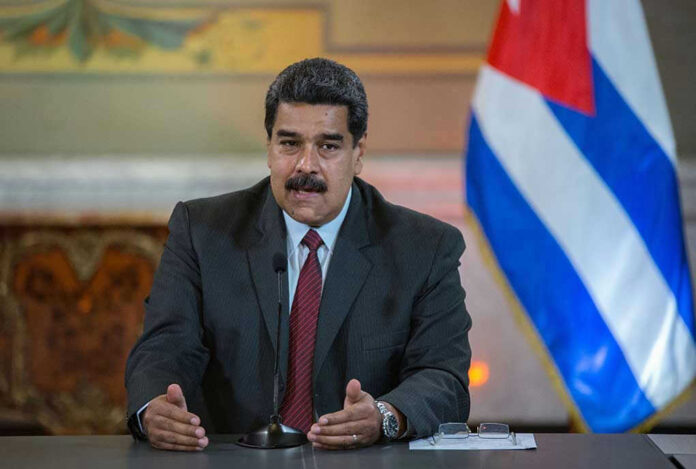
The 2026 U.S. military intervention in Venezuela unfolded as a dramatic turning point, shattering diplomatic norms and raising questions about international law and regional stability.
Story Overview
- The U.S. launched strikes on Venezuelan targets on January 3, 2026, resulting in the capture of Nicolás Maduro and his wife.
- The operation was framed as a crackdown on narcoterrorism and regional threats by the Maduro regime.
- Tensions peaked after years of strained U.S.-Venezuela relations, with previous sanctions and diplomatic efforts failing to resolve the crisis.
- International reactions were mixed, highlighting the complexities of unilateral military actions.
U.S. Military Operation and its Justifications
On January 3, 2026, the United States executed a series of military strikes targeting Venezuelan military facilities in Caracas and surrounding areas. The operation culminated in the capture of President Nicolás Maduro, a move publicly announced by then-President Donald Trump via Truth Social. The operation was framed as a necessary law enforcement action aimed at dismantling narcoterrorism networks and curbing the perceived threats posed by Maduro’s regime.
The U.S. government justified the intervention as a measure to counter the Maduro regime’s alleged involvement in drug trafficking and support for criminal gangs, including the notorious Tren de Aragua. This military action marked a significant shift from previous diplomatic and economic sanctions that had been in place since the early 2000s.
Historical Context and Lead-Up
The roots of the conflict trace back to years of strained relations between the United States and Venezuela, particularly after Maduro’s rise to power and the subsequent economic collapse in Venezuela. The U.S. had previously recognized opposition leader Juan Guaidó as interim president, further escalating tensions. In 2025, the U.S. intensified its military presence in the Caribbean, setting the stage for the January 2026 intervention.
Despite previous considerations of military options as early as 2017, U.S. actions remained limited to sanctions and diplomatic pressure until the 2026 operation. The capture of Maduro represented a decisive, albeit controversial, escalation in U.S. foreign policy toward Venezuela, aligning with Trump’s administration’s hardline rhetoric against narcoterrorism and authoritarian regimes.
Reactions and Consequences
The international community’s response to the U.S. intervention in Venezuela was polarized. While some applauded the removal of Maduro as a necessary step toward regional stability, others criticized the operation as an illegal act of regime change that violated international law. The Venezuelan government, despite the capture of its leader, declared a state of emergency and condemned the U.S. actions as a breach of sovereignty.
Domestically, the operation sparked debates over the legality and morality of unilateral military interventions. Protests and celebrations erupted among the Venezuelan diaspora, reflecting the deep divisions within the community regarding Maduro’s leadership and the future of Venezuela.
Long-Term Implications
The long-term implications of the U.S. intervention in Venezuela remain uncertain. While the operation temporarily removed a key figure of the Maduro regime, it did not immediately resolve the underlying political and economic crises. Questions linger about the U.S.’s role in Venezuela’s political future and the potential for further regional destabilization.
The situation continues to evolve as the international community grapples with the complexities of sovereignty, humanitarian concerns, and the ongoing fight against narcoterrorism. The 2026 intervention serves as a pivotal case study in the challenges of balancing national security interests with adherence to international norms.
Sources:
Wikipedia: 2026 US regime change in Venezuela
Wikipedia: 2026 Venezuela–United States conflict
Wikipedia: United States–Venezuela relations