
A single line in a Washington ballroom just set a date for a nationwide argument about what America is, and who gets to define it.
Quick Take
- President Donald Trump used the 74th National Prayer Breakfast on February 5, 2026, to frame prayer as “America’s superpower.”
- He announced “Rededicate 250,” a May 17, 2026 National Mall event tied to the nation’s 250th anniversary, aiming to renew “one nation under God.”
- He addressed prior “heaven” comments, describing them as humor that media treated too literally.
- The Department of Education issued new guidance the same day emphasizing protections for prayer in public schools.
A Prayer Breakfast That Turned Into a 250th-Birthday Rallying Cry
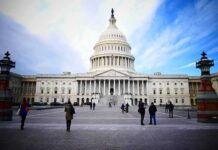
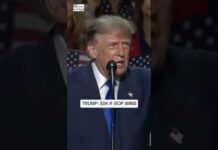
The National Prayer Breakfast has survived decades because it sells a rare product in Washington: a moment that pretends politics can pause. The 2026 version, held at the U.S. Capitol, didn’t pause anything. Trump’s keynote yanked the event into the Semiquincentennial spotlight and treated prayer less like private comfort and more like national infrastructure. He linked spiritual practice to civic resilience, then made it concrete with a date and a place.
Trump’s announcement centered on “Rededicate 250,” scheduled for May 17, 2026 on the National Mall. The pitch: a national ceremony of prayer, thanks, speech, song, and storytelling that presents America’s history as inseparable from God’s providence. Supporters hear a unifying reset button. Critics hear church-state alarms. The smarter reading: Trump chose the 250th because anniversaries bypass policy details and head straight for identity.
Why “One Nation Under God” Still Has Political Voltage
Trump’s language leaned on “one nation under God,” a phrase familiar enough to feel timeless and contested enough to mobilize people. For many Americans over 40, the phrase evokes childhood routine and Cold War certainty. For others, it signals exclusion. Trump’s strategic advantage is that the phrase lives in the Pledge of Allegiance, not in a campaign slogan factory; it carries institutional gravity even when deployed for political energy.
The Breakfast itself remains a bipartisan tradition dating to 1953, and that history matters. Rituals like this operate as civic glue precisely because they are repetitive. Trump used the ritual’s legitimacy to validate an invitation: show up, pray, and “rededicate” the country. That’s not a policy roll-out; it’s a narrative contest. Whoever wins the story of 1776 tends to win the argument about 2026.
The Stakeholder Web Behind the Announcement
Several figures and groups create the scaffolding for Rededicate 250. Faith Office leader Paula White-Cain spoke at the event, continuing her role as a key religious liaison. Speaker Mike Johnson’s presence reinforces how deeply Congress’s evangelical networks now shape Republican messaging. Reports also referenced Pete Hegseth, described as “Secretary of War,” an unusual title that raises questions about wording even as it signals a faith-and-defense theme.
On the organizing side, Freedom 250 is described as a non-partisan driver of Semiquincentennial programming, working alongside a White House Task Force 250. That pairing matters because it blends movement energy with official coordination. If the Mall event becomes huge, the administration can claim it as organic patriotism. If it becomes controversial, the “non-partisan” label becomes a political airbag. Either way, the event architecture is designed for scale.
School Prayer Guidance: The Quiet Policy Move Beneath the Big Symbol
The most immediate governance change mentioned alongside the announcement was new Department of Education guidance protecting prayer in public schools. That is where symbolism meets daily life. School prayer fights never stay abstract; they show up at school board meetings, in parent emails, and in administrators’ legal anxieties. A guidance document can’t rewrite the Constitution, but it can influence how cautious districts interpret student rights and staff boundaries.
From a common-sense conservative perspective, protecting students from being bullied or punished for voluntary prayer fits the American instinct for individual liberty. The hard part is enforcement without coercion. Families want assurance their kids can pray; they also don’t want a school acting like a church. The most durable approach respects voluntary expression while drawing bright lines against compelled participation—clean rules, fewer lawsuits, less chaos.
The “Heaven” Joke and the Media Problem Trump Keeps Exploiting
Trump also revisited prior sarcastic comments about not qualifying for heaven, explaining them as humor. That moment functions like a diagnostic test for modern politics: do you treat public speech as literal deposition testimony, or as live performance? Trump’s base usually hears the performance; many media outlets report the deposition. He benefits because the mismatch creates a steady supply of “they don’t get us” outrage, which fuels participation.
The deeper issue isn’t the joke. It’s trust. When faith outlets cover the moment as heartfelt clarification and other outlets treat it as evasive spin, audiences retreat into their usual camps. Rededicate 250 will intensify this dynamic because it’s built for cameras and clips. The winner won’t be whoever has the best argument; it will be whoever looks more sincere in 20 seconds.
What May 17, 2026 Could Become, and Why It Matters Beyond Trump
Two futures sit inside the same invitation. One future turns Rededicate 250 into a genuine civic prayer service: diverse churches, families, veterans, choirs, and ordinary Americans treating the 250th as a gratitude moment, not a partisan rally. The other future turns it into a referendum on secularism and nationalism, with predictable counter-protests and predictable headlines. The planning phase will determine which tone dominates.
Yuge! At National Prayer Breakfast, Trump Announces the 'Rededicate 250' Prayer Eventhttps://t.co/02MbBbNzHN
— RedState (@RedState) February 5, 2026
Semiquincentennial celebrations will happen regardless of who headlines them, and that’s the point. Trump is trying to brand the nation’s 250th around spiritual renewal, not bureaucratic fireworks. Readers who prize tradition will see a coherent throughline from founding-era faith language to modern public prayer. Readers who prize strict separation will see a boundary test. May 17 will reveal whether America still shares enough common vocabulary to disagree without splitting.
Sources:
Donald Trump Declares ‘Prayer Is America’s Superpower’ at National Prayer Breakfast
Trump Declares Plan to Rededicate America as ‘One Nation Under God’ for 250th Anniversary
Transcript: President Trump Remarks at National Prayer Breakfast