
An alleged IED placed at the headquarters that runs America’s Iran war is a gut-check moment for a movement already split over another Middle East fight.
Quick Take
- Federal prosecutors say two siblings were indicted after an alleged improvised explosive device was placed outside MacDill Air Force Base’s visitor center in Tampa.
- MacDill houses U.S. Central Command and U.S. Special Operations Command, key hubs for ongoing operations tied to the war with Iran.
- Authorities say the device did not detonate but could have been “potentially very deadly,” and the base threat level was raised to “Charlie.”
- The primary suspect is reportedly in China, complicating arrest and any potential extradition, while his sister is in U.S. custody.
What happened at MacDill—and why this target matters
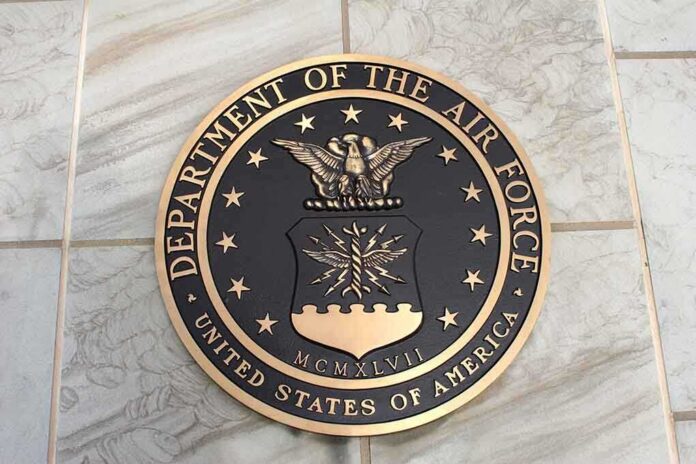
Investigators say a suspicious package was discovered March 16 outside the MacDill Air Force Base visitor center in Tampa, Florida, prompting a response from an FBI bomb technician and a jump in the installation’s threat posture to “Charlie,” the second-highest level. Prosecutors later tied the incident to an alleged IED plot. The location is not random: MacDill hosts CENTCOM and SOCOM, making it a high-value target during wartime operations.
FBI Director Kash Patel announced March 26 that indictments had been unsealed against siblings Alen Zheng, 20, and Ann Mary Zheng, 27, in connection with the alleged device. Authorities say the IED did not detonate, but the government has described it as potentially deadly. While details about design and construction have not been disclosed publicly, the operational reality is clear: an attack attempt at a U.S. command hub forces immediate security shifts and creates disruption even without an explosion.
Charges filed, custody status, and what investigators say they can prove
Federal charging documents, as summarized in multiple reports, allege Alen Zheng made and possessed an IED and attempted to damage government property by fire or explosion, along with unlawful making of a destructive device and possession of an unregistered destructive device. Ann Mary Zheng was arrested and charged as an accessory after the fact and with evidence tampering. In one allegation highlighted in reporting, she is accused of hiding or damaging a 2010 Mercedes-Benz to hinder its use in proceedings.
Another figure, Jonathan James Elder, 35, was arrested after authorities say he made threatening calls to the base in the days following the suspicious package discovery. This parallel case matters because it illustrates how a single security event can trigger copycat threats or opportunistic intimidation—forcing bases to treat every lead as real until proven otherwise. Public reporting does not establish a coordinated relationship between Elder and the Zheng siblings; the known connective tissue is timing and the same target location.
A war-footing home front meets an extradition wall in China
The most practical obstacle in the case is geography and jurisdiction. Authorities say Alen Zheng is in China, which complicates apprehension and may require international cooperation that is never guaranteed. Reporting does not spell out how or when he traveled, or whether any foreign entity directed the alleged plot. That limitation matters: without a demonstrated command-and-control link, the public can’t fairly assume “state action,” even as the location of the suspect abroad raises obvious national-security questions.
How this collides with MAGA’s Iran-war divide
Conservative voters over 40 have spent years watching Washington burn credibility on overspending, inflation, border chaos, and ideological pressure campaigns that punished ordinary families. Now, with the U.S. at war with Iran and energy costs a daily pain point, the movement is also wrestling with a different frustration: promises to avoid new wars versus the realities of escalation. An alleged IED incident at a command hub intensifies the debate by highlighting the domestic risk that comes with foreign conflict.
Security posture, civil liberties, and what remains unknown
Officials say they are still exploring leads, and key facts remain undisclosed, including the suspects’ motivations, any organizational ties, and the device’s technical details. That restraint is normal in an active investigation, but it also invites rumor—especially online. The constitutional balance point is straightforward: aggressive pursuit of a credible bomb case is appropriate, but wartime fear has historically been used to justify broader surveillance and overreach. The public should demand accountability and specificity as facts emerge.
FBI Announces Chinese Suspects Indicted for IED at CENTCOM Headquartershttps://t.co/FByMJq0Kq8
— PJ Media (@PJMedia_com) March 26, 2026
Patel’s public messaging framed the case as a no-escape pursuit, stating that those who target service members and military facilities will be pursued “to the ends of the earth,” and reiterating online that the FBI will keep working with partners to bring those responsible to justice regardless of location. In the near term, the practical test will be whether law enforcement can secure evidence, protect installations like MacDill, and resolve the China-based suspect problem without letting national security become a blank check.
Sources:
2 siblings charged in alleged IED plot at Florida base linked to Iran war
Jerusalem Post international coverage of the MacDill IED case
IED at key US base housing CENTCOM HQ: Brother-sister duo charged; one in custody, other in China
Brother, sister indicted in alleged IED plot at Florida base tied to Iran war; one suspect in China