
Former President Obama’s unexpected endorsement of President Trump’s Gaza peace deal signals a rare bipartisan moment, but the plan’s real test lies ahead as Hamas faces mounting pressure and Middle East security hangs in the balance.
Story Snapshot
- Trump’s new Gaza peace plan earns public praise from Obama, highlighting bipartisan support.
- The deal sets a tight deadline for Hamas to accept terms, with regional stability at stake.
- The plan promises a ceasefire, hostage return, and transitional governance, aiming to end years of violence.
- Conservatives view the initiative as a win for American leadership and constitutional values in foreign policy.
Trump’s Gaza Peace Proposal Receives Bipartisan Praise
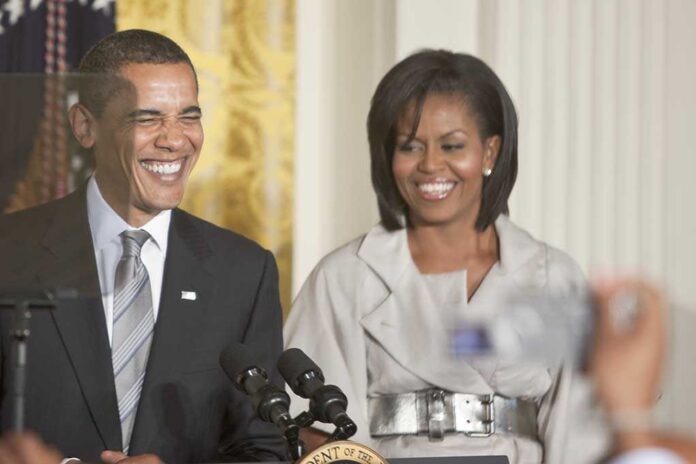
On September 29, 2025, President Donald Trump unveiled a comprehensive Gaza peace plan at the White House, joined by Israeli Prime Minister Benjamin Netanyahu. The proposal outlines immediate steps for a ceasefire, the safe return of hostages, and the establishment of a transitional governance structure in Gaza. Former President Barack Obama’s public endorsement followed on October 9, a move that surprised many and signaled a rare moment of bipartisan agreement on foreign policy. This alliance reflects growing recognition that decisive American leadership is essential for resolving long-standing Middle East conflicts.
Trump’s plan sets an October 5 deadline for Hamas to accept the deal, putting pressure on all parties to act swiftly. Netanyahu’s support for the initiative focuses on ensuring Israeli security while opposing the creation of a Palestinian state. The proposal includes international stabilization forces and calls for robust oversight of the transitional government, aiming to guarantee both regional peace and the safety of American allies. Hamas’s response remains uncertain, but global attention is intensifying as the deadline approaches.
Background: The Roots and Challenges of the Gaza Conflict
The ongoing conflict in Gaza traces back to the Israeli-Palestinian dispute, with major escalations since Hamas gained control in 2007. Prior attempts at ceasefires and peace negotiations have repeatedly failed, most recently in 2023 and early 2025. Trump’s current proposal follows a series of unsuccessful efforts, distinguishing itself with strong U.S. backing and broader international involvement. The plan’s transitional governance and stabilization forces are designed to address governance gaps and prevent future violence, but skeptics question whether these measures can overcome entrenched hostilities.
Americans frustrated by years of globalist policies and perceived weakness on foreign threats are encouraged by Trump’s assertive approach. The deal aligns with core conservative principles, prioritizing national sovereignty, security, and constitutional values. Obama’s endorsement gives the initiative added weight, but it also raises questions about the durability of bipartisan support should implementation prove challenging.
Key Stakeholders and Power Dynamics
Primary actors in the peace process include President Trump, former President Obama, Prime Minister Netanyahu, and Hamas leadership. Trump seeks to end the conflict and cement his legacy as a peacemaker, a goal echoed by Obama’s call for relief and encouragement. Netanyahu’s involvement centers on safeguarding Israeli interests, while Hamas faces mounting pressure to accept the deal or face international consequences. The U.S. remains a powerful mediator, leveraging its influence to drive negotiations and enforce accountability.
The international community, including Arab states and global organizations, watches closely as events unfold. Their support for transitional governance and stabilization forces could prove pivotal in maintaining peace and rebuilding Gaza. If Hamas rejects the deal, the region risks renewed violence and instability, with repercussions for American interests abroad and allies in the Middle East.
Short- and Long-Term Impacts of the Peace Deal
The immediate effect of a successful peace agreement would be a ceasefire and the release of hostages, offering hope to families affected by the conflict. Longer-term, the plan could result in greater stability, eventual recognition of Palestinian statehood under strict oversight, and enhanced security for Israel. Economic and social recovery in Gaza depends on the effective implementation of transitional governance and international support. While proponents hail the deal as a breakthrough for American leadership and constitutional values, critics caution that challenges remain, particularly regarding Hamas’s willingness to comply and the feasibility of sustained peace.
Experts and academics emphasize the complexity of the situation, underscoring the importance of governance reforms, economic development, and robust monitoring. Supporters argue that Trump’s approach is pragmatic and puts U.S. interests first, while skeptics highlight the historical difficulties in achieving lasting peace in the region. Regardless of outcome, the bipartisan nature of Obama’s endorsement and Trump’s assertive leadership mark a notable shift in American foreign policy, resonating with conservatives who demand results, accountability, and respect for national sovereignty.
Sources:
Gaza war peace plan – Wikipedia
Obama applauds Trump’s Gaza peace deal: ‘We should all be encouraged and relieved’ – AOL