
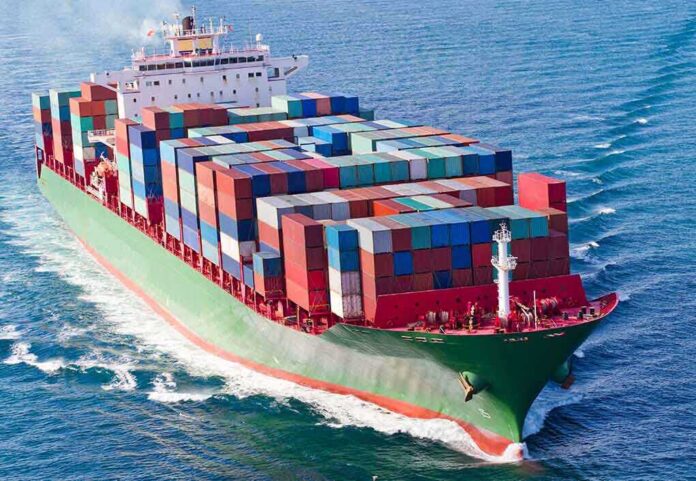
A cargo ship attack just 11 miles off Iran is the kind of “small incident” that can quickly turn into a big hit to American wallets and global stability.
Quick Take
- A northbound bulk carrier reported being attacked by multiple small craft near the Strait of Hormuz, and the UK maritime agency said the crew was safe.
- The incident occurred about 11 nautical miles west of Sirik, Iran, in one of the world’s most critical energy and shipping chokepoints.
- No group publicly claimed responsibility, and key details—like the ship’s identity and any damage—remain unclear while an investigation continues.
- The report landed amid a wider U.S.-Iran-Israel conflict dynamic, a U.S. naval blockade on Iranian ports, and fragile diplomacy headed toward talks in Pakistan.
Attack Report Raises the Stakes in a Global Chokepoint
UK Maritime Trade Operations reported that a northbound bulk carrier was attacked by multiple small craft near the Strait of Hormuz on Sunday, May 3, 2026. The agency said the ship was approximately 11 nautical miles west of Sirik, Iran, when the incident occurred. UKMTO said all crew were safe, no injuries were reported, and there was no reported environmental impact, while urging ships transiting the area to use caution.
The early facts are limited, and that limitation matters. UKMTO’s update did not publicly identify the vessel, attribute responsibility, or provide granular detail on whether the ship suffered mechanical damage or was simply harassed and forced to maneuver. With no claim of responsibility, analysts are left with pattern recognition rather than proof. Still, the location—close to Iran’s coastline—ensures the episode will be read through the lens of Iran’s long history of asymmetric maritime tactics.
Why Hormuz Still Matters to Everyday Americans
The Strait of Hormuz functions as a narrow passageway that carries an enormous share of global energy shipments, often cited at roughly 20% to 30% of world oil trade. When shipping companies perceive higher risk—whether from attacks, near-misses, or threats—costs rise quickly through higher insurance, rerouting, delays, and fuel consumption. Those costs rarely stay overseas; they can filter into U.S. prices for gasoline, home goods, and food through transportation and manufacturing inputs.
The strategic consequence is just as important. A chokepoint under persistent pressure becomes a lever for foreign governments, armed groups, and speculators. Even when a crew walks away unharmed, repeated incidents can create a “new normal” of intimidation. From a conservative viewpoint, this is where national strength and clear deterrence matter: global trade needs predictable rules, and the U.S. government’s first duty is protecting American interests—economic security included—without drifting into open-ended commitments.
Blockade Enforcement and a Pattern of Recent Incidents
The reported attack did not occur in a vacuum. The broader backdrop includes a U.S. naval blockade targeting Iranian ports and Iranian responses that reportedly include threats, seizures, and toll demands for certain ships. Reporting also referenced a recent series of maritime incidents, including an April 22 attack on a cargo ship and additional vessel-related hostilities in early May. This cluster of events is why maritime alerts now routinely warn commercial operators to prepare for rapid escalation.
U.S. forces also reportedly seized an Iranian-flagged ship the same day in a blockade enforcement action described as the first interception of its kind in this phase of the conflict. That combination—commercial ships facing harassment and warships conducting interdictions—raises the chance of miscalculation. When multiple actors operate close to shore at speed, a single mistaken identification or overreaction can turn a limited encounter into a wider confrontation, especially if diplomacy is already strained.
Diplomacy, Ceasefire Claims, and the Accountability Gap
President Trump has publicly rejected at least one Iranian peace proposal as inadequate and has framed the issue as separate from nuclear talks, while Iran has reportedly said it is reviewing the U.S. response and asserting control measures in the strait. Meanwhile, U.S. officials were reported to be heading to Pakistan for talks. The tension between active operations at sea and political messaging on land makes it harder for markets and allies to judge whether escalation is imminent.
BREAKING: A large cargo ship reports being attacked by multiple small boats in the Strait of Hormuz just 11 miles from Iran's coast. pic.twitter.com/t28KVThfsk
— GBX (@GBX_Press) May 3, 2026
The most important unanswered questions remain basic: who ordered the small-craft action, what exactly happened alongside the hull, and whether the ship’s passage was materially disrupted. UKMTO’s neutral posture—focused on safety rather than blame—helps prevent premature conclusions, but it also leaves space for propaganda and conspiracy narratives on all sides. In a time when many Americans distrust “the experts,” transparent facts will matter as much as firepower in maintaining credibility.
Sources:
Cargo ship attacked by small craft near Strait of Hormuz, UK maritime agency says