
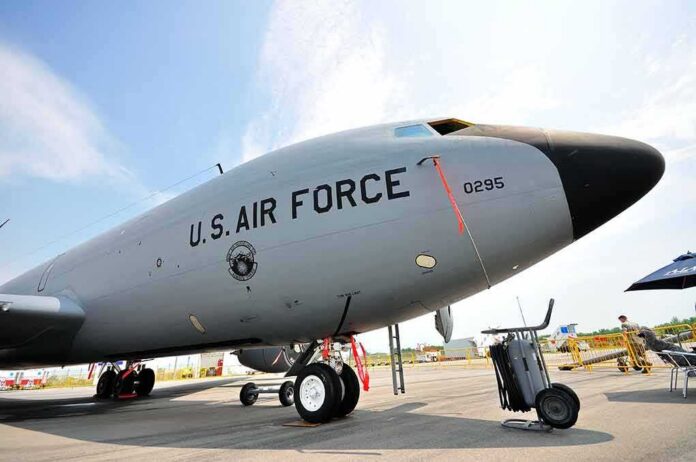
U.S. prosecutors say a lone intruder with an axe left a $60 million Air Force C-130H effectively destroyed inside a secure Irish airport hangar.
Story Snapshot
- A federal grand jury indicted an Irish national over alleged sabotage of a U.S. military C-130H at Shannon Airport.
- The indictment details cut wires, crushed lines, broken gauges, and other targeted damage inside the aircraft.
- Prosecutors say the plane was effectively destroyed, while related charges also moved forward in Irish courts.
- Prior U.S. cases show courts weigh intent to harm national defense in sabotage prosecutions.
What Prosecutors Allege Happened Inside the C-130H
United States prosecutors charged Irish national Dâithí O’Corrain with destroying a U.S. Air National Guard C-130H at Shannon Airport in Ireland. The indictment says he breached the airport’s perimeter, broke the crew door lock, and barricaded himself inside. It alleges he severed wire bundles and hydraulic lines, crimped a liquid oxygen line, destroyed cockpit gauges, and punctured air ducts. The U.S. Attorney’s Office valued the aircraft at $60 million and said it was effectively destroyed.
The court filing describes focused hits on critical systems rather than random damage. Cutting wiring and hydraulic lines can disable control surfaces and key avionics. Damaging oxygen lines and air ducts can affect crew safety and aircraft pressurization. Breaking instruments removes the pilot’s eyes. The detailed list in the indictment supports the claim that the attack aimed at making the aircraft unable to fly, not at cosmetic harm alone.
Parallel Irish Charges and Jurisdiction
Irish authorities also charged O’Corrain with criminal damage and unlawful entry tied to the same incident. Reports say he appeared in Irish district court on those counts. The case now runs on two tracks: an American federal indictment in the Southern District of New York and Irish criminal proceedings for damage and airport breaches. That cross-border setup can slow document release and limit the public evidence available at this stage.
Prosecutors in New York framed the case as a planned attack that caused tens of millions of dollars in damage and risked military operations. The announcement named the United States Attorney leading the case and the Federal Bureau of Investigation (FBI) New York field leadership. These official statements anchor media coverage and help set early public understanding of what happened and why it matters for the military.
Why This Matters for Security and National Defense Law
A C-130H is a workhorse that moves troops, equipment, and aid. Taking one offline at a foreign transit stop can ripple through missions. Past American cases show how even small acts can count as sabotage if they aim to interfere with defense. Courts have upheld convictions where defendants cut wiring on a KC-135 refueler or damaged fighter aircraft systems. Judges look closely at intent to harm national defense, not only at the amount of damage.
US charges Irishman with destroying a $60 million Air Force C-130 with an axe
The 48-year-old allegedly used an axe, a drill, corrosive gallium and other tools to sabotage the C-130 while it was parked at an airport in Ireland.
▶ Watch: https://t.co/ozpVv4ik0y
— Truth Media (@truthmediaapp) November 18, 2026
Airport security is also in focus. The indictment places the breach at the perimeter and the entry through the crew door. That raises questions for any host airport that handles allied military traffic. Industry guidance has long warned that airside areas, fences, and access points are high-value targets for bad actors. A single intruder with tools can cause losses that cost taxpayers and disrupt units that depend on scarce aircraft.
What Is Established Now, and What Comes Next
The government has filed charges. The indictment and press releases provide the clearest public record of claimed facts. Reporting from Ireland confirms local charges for damage and unlawful entry linked to the same incident. Prosecutors describe the aircraft as effectively destroyed or permanently grounded. At this point, these are allegations, and O’Corrain is presumed not guilty unless proven otherwise in court.
If the case proceeds, the best clarity will come from evidence the court allows. That can include photos, tool marks, fingerprints, maintenance records, and expert reports on the aircraft systems. For many readers, the larger throughline remains familiar. People across the political spectrum worry that security gaps persist even after years of spending. They also fear that when the government responds, accountability is slow and costly. This case speaks to both concerns with sharp, concrete stakes.
The Larger Public Interest: Trust, Cost, and Readiness
Taxpayers paid for the C-130H, and service members depend on it for work and safety. When an aircraft is taken down on the ground, the loss is not just a dollar figure. Units must reshuffle tasks, and maintenance teams must inspect and secure other aircraft. Prosecutors say this strike hit critical aircraft functions and undercut operations. If proven, it shows how one person can stress a system built on trust at shared airports.
Americans on the right and left can agree on this: security should be tight, and resources should be guarded. The alleged breach in Ireland shows how a gap at a fence and a single door can waste millions and weaken readiness. It is fair to ask how hosts and the United States harden access points, share alerts, and protect crews. Clear answers and firm fixes will matter more than press lines once the court process runs its course.
Sources:
taskandpurpose.com, kmbc.com, bbc.com, independent.ie, crimeworld.com
© standardheadlines.com 2026. All rights reserved.