
Trump’s second-term crackdown on Iran-linked elites is now colliding with a question conservatives won’t ignore: how far can Washington go in the name of security without turning immigration enforcement into a blunt political weapon.
Quick Take
- Secretary of State Marco Rubio announced the revocation of visas and even green cards for relatives of senior Iranian officials tied to the regime’s repression and terror networks.
- The policy is being framed by the State Department as preventing Iranian regime beneficiaries from using U.S. immigration benefits while the regime abuses its own people.
- Key facts remain unclear in the available reporting, including the identities of targeted individuals, the number affected, and the specifics of any arrests.
- The move lands as MAGA voters remain divided over deeper U.S. involvement in an Iran conflict and increasingly skeptical of open-ended foreign entanglements.
Rubio’s Announcement Targets Regime-Connected Relatives
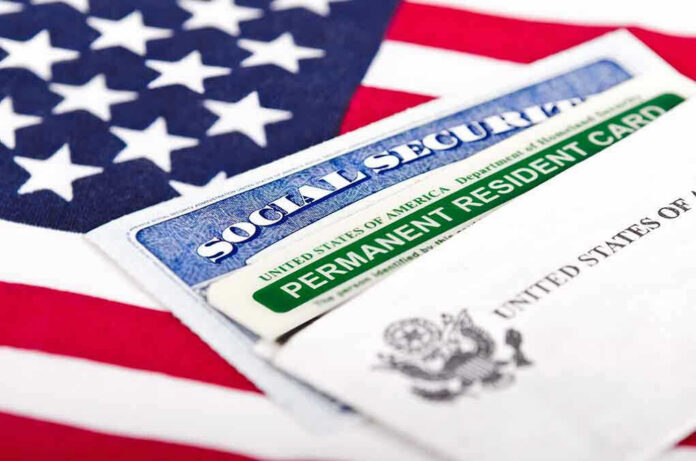
Secretary of State Marco Rubio said the Trump administration is moving to revoke immigration privileges for family members and relatives of Iranian senior officials, including permanent residents in some cases. State Department messaging emphasized that visa access is “a privilege, not a right,” and warned that immigration benefits can be denied or revoked if someone is in the United States to support terrorism. The stated goal is to stop regime-linked families from benefiting from America’s immigration system.
The reporting provided does not name the “most notorious terror general” referenced in the headline, and it does not provide case-specific details about which relatives were targeted, how many people were affected, or what exact legal process followed any revocations. That matters because green card revocation is a serious step with real constitutional implications for due process. The available source summaries describe potential arrests and deportation proceedings, but they do not document specific arrest timelines or filings.
What the State Department Says the Policy Is Meant to Stop
State Department statements described the action as a denial of access to the U.S. immigration system for those who “profit from the Iranian regime’s brutal oppression.” Another official statement argued regime members and relatives should not “take advantage” of American visa and immigration pathways while Tehran represses basic rights at home. On its face, that rationale is straightforward: keep hostile-regime beneficiaries out and reduce safe havens for people tied to repression and terror support.
For many conservatives, that objective fits a broader demand for basic national self-respect: immigration benefits should not function as a loophole for foreign elites connected to adversarial regimes. At the same time, the strength of the policy will be judged by its execution. Clear standards, transparent criteria, and lawful process will decide whether this becomes a targeted national-security tool or a precedent that future administrations could repurpose against disfavored groups under looser definitions of “support.”
International Pressure Builds as the IRGC Label Becomes a Flashpoint
The move comes amid broader international pressure on Iran’s security apparatus. According to the research summary, the European Union designated Iran’s Islamic Revolutionary Guard Corps as a terrorist organization, citing “serious human rights violations” connected to protest crackdowns and Tehran’s backing of Russia’s war against Ukraine. That alignment matters because it signals a wider Western posture against Iran’s coercive institutions, not only a unilateral U.S. decision tied to domestic politics.
Research summaries also referenced coordinated U.S. and Israeli strikes that reportedly weakened Iranian missile, nuclear, and proxy networks, though the provided inputs do not include operational details, battle damage assessments, or independent verification. Conservatives watching energy prices and global instability will recognize the real-world tradeoffs: pressure campaigns can constrain adversaries, but escalation risks blowback, market spikes, and mission creep. The public deserves clarity on end goals before policies drift from deterrence into another open-ended conflict.
MAGA’s Split: Enforcement at Home, Caution Abroad
This immigration action hits at a moment when Trump-aligned voters are increasingly wary of endless war, even as they demand tougher borders and tougher national-security screening. The same voters who spent years watching Washington prioritize global projects over domestic stability are now asking why America repeatedly ends up carrying the burden abroad. The research provided does not include polling, but it reflects a political environment where support for Israel and any broader Iran conflict is debated inside the MAGA coalition.
The constitutional question is where this goes next. Targeting relatives of foreign officials may deter hostile-regime insiders from planting family members in the United States, but enforcement involving green card holders raises the stakes. The research does not provide court rulings, statutory analysis, or details on hearings, so readers should treat the “then has them arrested” framing as unverified without case documentation. A policy can be both tough and lawful—but it must prove it through transparent process.
Sources:
https://www.state.gov/briefings/department-press-briefing-march-28-2025